Sunday, August 7, 2011

The Dailies 8/7/11: In Brief, Part Two!


Hoop Dreams (1994) – A-
Director: Steve James
Featuring: Arthur Agee, William Gates and their families
Awards: Nominated – Film Editing


Is it a surprise that a majority of our top flight athletes, particularly in football and basketball, are from poor African-American communities? It goes without saying that life in some of these communities is about as tough as life gets in America. To those people trying to make it in such communities, I imagine life there seems inescapable except by only a few avenues, some legal and some illegal. To those kids playing sports in inner-cities and urban neighborhoods, they aren’t a fun diversion. A sport like basketball is life; it’s a lottery ticket, a way to escape the ghetto and a way to finally live without scrounging and clawing.


This makes it all the more cruel when kids with real talent and dreams of stardom are sidelined by knee problems, frosty relationships with coaches and family, no money to pay high school tuition; the list goes on. Hoop Dreams follows the stories of two Chicago basketball prospects, William Gates and Arthur Agee, for about four years. We see both Gates and Agee recruited by top private high schools, we see their high school experiences, and we meet their families and see the hardships they endure. The access Steve James gets for Hoop Dreams is unbelievable, and the amount of craft and love that he puts into telling the stories of the two boys is monumental. Hoop Dreams is about more than basketball. It is also a documentary about the difficult, turbulent lives of good people in the inner-city, struggling to make ends meet.


The stories of the two boys are probably shared by thousands of similar young men who had tones of talent but didn’t make the NBA, either due to their own flaws or by external factors. Agee didn’t impress the coaches at prestigious St. Joseph’s High School (where Isiah Thomas played his high school hoops), and when the school alerted his family that they were well short on Arthur’s tuition payments, he was shuffled off to an inner-city school. Arthur’s new coach remarks that if Arthur had played as well as the school initially thought he would, he’d still be enrolled there despite being late on payments. Bingo.


Gates’ knees were his worst enemy, failing him at a time when scholarship offers were pouring in. Also a player at St. Joseph’s, Gates’ coach may have rushed him back into action after his knee injury, further aggravating the problem. These things happen sometimes.


What I asked myself while watching Hoop Dreams was whether this system is demeaning and whether there could be a better one. Should the high schools and colleges that recruit these athletes be commended for providing this kind of opportunity when we know that such opportunities would not exist for these men if they weren’t good at sports? Hoop Dreams brings up the question, but doesn’t answer it. I’m not sure I can.


On Golden Pond (1981) – B+
Director: Mark Rydell
Starring: Henry Fonda, Katharine Hepburn, Jane Fonda, Doug McKeon
Awards: Won –Actor (Henry Fonda), Actress (Hepburn), Adapted Screenplay. Nominated – Picture, Supporting Actress (Jane Fonda), Cinematography, Director, Film Editing, Original Score, Sound


Henry Fonda makes his final film role a memorable one, winning an Academy Award for his portrayal of grumpy retired professor Norman Thayer. His wife in the film, played by Katharine Hepburn, also won an Academy Award for her efforts. Norman has had a historically chilly relationship with his middle-aged daughter (played by Henry Fonda’s real life daughter Jane, and On Golden Pond follows Norman’s revitalization when his daughter leaves her stepson to stay with the old couple at their vacation home on Golden Pond.


On Golden Pond is quite formulaic, but it allows the two leads to fill in the spaces on their own and their work makes the material much more dynamic. The film presents an outline of a story about a couple advancing in age and dealing with the realization that their days will soon end. Fonda and Hepburn, masters that they are, give a realistic depiction of the thoughts and feelings that would accompany such a situation.


The story of the film contains many enjoyable arcs and moments, not the least of which is Norman’s gradual thawing demeanor in the presence of the oft-brash and misunderstood stepson (Doug McKeon). The best thing about On Golden Pond, however, is the relationship between Fonda and Hepburn. Their love may be a tad idealistic, but it feels real, and their tremendous performances provide perhaps the most in-depth, truthful look at an elderly relationship I’ve yet seen on film.


Bullitt (1968) - C
Director: Peter Yates
Starring: Steve McQueen, Robert Vaughn, Jacqueline Bisset, Don Gordon
Awards: Won – Film Editing. Nominated – Sound


Can a great car chase scene elevate an otherwise mundane action film? You know the one I’m talking about. Steve McQueen chasing after a couple of bad guys through the streets of San Francisco, with hub caps flying off the cars at every bump or sharp turn. It’s one of the most memorable chase scenes in film history, but unlike in The French Connection, where that film’s fantastic chase scene was built into an already fantastic movie, the chase scene in Bullitt provides a temporary thrill. Bullitt is confusing and quite boring for a cop thriller. There are a lot of meetings, a lot of walking into offices.


The cast, by and large, is blameless. Steve McQueen plays the titular detective, tasked with protecting a key witness long enough for him to testify in court a couple of days later. McQueen was known as the “king of cool” for a reason, and his very presence in most any film is electric. McQueen kills bad guys, fornicates with beautiful women, and does the “I play by my own rules” cop routine. No problem there.


The problem comes with the plot, which starts out as a slow burn but rapidly takes so many twists and turns that it becomes difficult to unravel. We get body doubles, characters who are suddenly introduced and just as suddenly killed, a strange airport foot pursuit, and of course, that car chase. Robert Vaughn plays a wealthy city humanitarian/politician who is depending on the testimony of the witness. He’s supposed to be a threat to Bullitt, but he eventually becomes a simple nuisance to the detective and the viewer. If Bullitt wasn’t too busy shoehorning more angles into its plot, we might have had a classic cop drama. Instead, it’s justifiably known only for its most famous scene.


The Darjeeling Limited (2007) – B+
Director: Wes Anderson
Starring: Owen Wilson, Adrien Brody, Jason Schwartzman, Anjelica Huston


It seems that after The Life Aquatic with Steve Zissou (2004), audiences were tired of Wes Anderson’s act. Anderson’s style is undeniably unique; he uses colors, music, fashion, even the fonts on his title cards to create his own tone and atmosphere. Most of his characters are similar, too. Generally, they’re wealthy, often from high society and old money. And also generally, they’re miserable, trying to make amends with family members, friends and lovers over past misdeeds and trying to build a functioning adulthood on top of a dysfunctional, almost nonexistent childhood.


I say The Life Aquatic with Steve Zissou was a turning point for Anderson’s career because his next feature, The Darjeeling Limited, was lightly promoted and lightly discussed upon release compared to his previous films. Audiences who grew tired of Anderson and passed on The Darjeeling Limited did themselves a tremendous disservice, however, because this is one of his finest films.


The film follows the travels of three brothers (Wilson, Brody, and Schwartzman) as they make their way through India, first by train and later however they can. We get the idea that the brothers don’t see each other or talk much, and we later learn that the trip was organized so that the three could visit their mother (Huston), who relocated to an Indian nunnery and whom they haven’t seen in years. Though the themes in The Darjeeling Limited will be familiar to Anderson viewers, the sense of adventure in this film is unseen in any of his previous pictures. There are jokes along the journey, but the highlight of the film is watching the three brothers repair their relationship against their exotic locale and watching how their locale factors into their efforts. The Darjeeling Limited may have a warped sentimentality, but its themes of family, togetherness and brotherhood are sincere and fulfilling.


A Man for All Seasons (1966) – B+
Director: Fred Zinnemann
Starring: Paul Scofield, Leo McKern, Robert Shaw, Orson Welles
Awards: Won – Picture, Actor (Scofield), Cinematography (Color), Costume Design (Color), Director, Adapted Screenplay. Nominated – Supporting Actor (Shaw), Supporting Actress (Wendy Hiller)


Sir Thomas More, whose story is told in A Man for All Seasons, is a character I don’t believe could exist in a film set in the modern day. His unwavering faith in God and his steadfast personal convictions in relation to this faith would seem unbelievable if put into a modern context. Of course, A Man for All Seasons, based on the famous play (and the real story of More), is set during the reign of Henry VIII in England. Henry demands a divorce, you see, because his wife is unable to yield a male heir to the throne. Henry would like a more fertile upgrade, but the pope refuses to grant Henry a divorce. Henry decides to split with the church, and Sir Thomas More, Lord Chancellor, is told by Henry to support the divorce to lend their arrangement legitimacy. More’s allegiance, however, is to the pope and the church, and the film tells the story of his persecution and his adherence to his convictions.


Paul Scofield won a best actor Oscar for his portrayal of More. He is perfectly stoic and reserved in the role. He plays More as a man comfortable with his decision, unswayed by the carrots of titles and lands dangled in front of him by the king and his subordinates. Sharp casting gives us Robert Shaw as the guffawing but manically temperamental Henry VIII and Orson Welles as the acquiescent Cardinal Wolsey. The principals are all very strong, but the film is carried by Scofield, whose calm demeanor in the face of certain death provides the enduring image of the film.


A Man for All Seasons ends in an English court, where Sir Thomas is convicted of treason against the king and is sentenced to death (this is based on a very famous real life episode, so I assume I’m not spoiling anything). In the scene, More lays out his case and makes a convincing argument for his innocence before being betrayed by a former associate and subsequently condemned. Scofield and the story are so strong that I found myself rooting for More’s acquittal, even though I knew how the story would end up.


In the Heat of the Night (1967) – B
Director: Norman Jewison
Starring: Sidney Poitier, Rod Steiger, Warren Oates, Lee Grant
Awards: Won – Picture, Actor (Steiger), Film Editing, Sound, Adapted Screenplay. Nominated – Director, Sound Effects


In the Heat of the Night is a film that is a pure product of its time. I don’t know if there is a community in this nation right now that would be thrown upside down simply due to the presence of a black man. I’d like to think not, but perhaps I’m speaking from my liberal and sheltered existence in Massachusetts and not from reality.


This is exactly what happens in In the Heat of the Night, when Sidney Poitier is apprehended and suspected of a murder he did not commit. He is quickly exonerated of the charges, but the local bigoted white sheriff (Steiger) discovers that Poitier is a respected homicide detective in Philadelphia and reluctantly requests his assistance in solving their murder. Poitier is ordered to help by his supervisors back home, and he is then forced to brave the rubber necks and racist barbs of both the townsfolk and the sheriff.


In the Heat of the Night is carried by the strong performances of Poitier and Steiger, who rise above the mostly blasé murder plot and give great color and punch to the dialogue and action scenes when called for. Poitier and Steiger eventually develop a professional trust and a personal, if uneasy, friendship. The film’s best scenes are those of Steiger trying to deflect the racist pressure of his colleagues and the townsfolk to kick Poitier out of town; he is a stubborn man, but racism is not in his heart. His conversation with Poitier about his unhappy personal life is another highlight.


The film does have problems. The plot itself is cookie-cutter and the real drama comes from the race-based dynamic between Poitier and the townspeople. Though they threaten Poitier physically at points, the racist thugs look to come from out of a comic book and the realism of their threat suffers for it. I also felt like the racist whites were too east a target, because they are so dimwitted in the film that I didn’t get the sense that they should know any better. To see this racism from more fleshed-out characters would have better driven the point home. Despite the flaws, In the Heat of the Night does take an honest look at racism at a time when very few forms of media did so, and coupled with its performances, the film is a winner.


John Lacey

Monday, July 25, 2011

The Dailies 7/25/11 - In Brief, Part One!


Goodbye, Mr. Chips (1939) – A-
Director: Sam Wood
Starring: Robert Donat, Greer Garson, Terry Kilburn, Paul Henreid
Awards: Won – Actor (Donat), Nominated – Actress (Garson), Director, Editing, Sound Recording, Written Screenplay, Picture


Goodbye, Mr. Chips is a heartwarming tale about a stuffy schoolteacher who takes a position at Brookfield Public School in Britain and remains there for sixty years. The film’s many charms include Donat as the initially misunderstood and later beloved Mr. Chipping, who eventually comes out of his shell at the school and becomes an institution almost equally important as Brookfield itself. His interactions with students through the years are artfully written, as we see Chipping teach the sons and grandsons of his first classes of students. The honest and believable love between Chipping and his wife Kathy (Garson) is an additional treat in this joyful look at a long and fulfilling life. Goodbye, Mr. Chips was later made into a 1969 musical starring Peter O’Toole and Petula Clark in the lead roles.


Westworld (1973) – B
Director: Michael Crichton
Starring: Yul Brynner, Richard Benjamin, James Brolin


Westworld is perhaps the apex of unsettling, dystopian 1970s science fiction. The film follows two men (Benjamin and Brolin) and their vacation to Delos, an amusement park populated with lifelike androids who indulge the human guests with their every wish. Naturally, the robots malfunction and turn on the humans, systematically killing them. Westworld’s bleakness and grimness in story and in look and feel play nicely against the fancy, technologically advanced androids and the gizmos and gadgets that control them. Brynner, playing a mindless, automated version of his character from The Magnificent Seven (1960), is very effective as a methodical robotic gunslinger.


Control Room (2004) – C-
Director: Jehane Noujaim
Featuring: Hassan Ibrahim, Josh Rushing, Samir Khader


Control Room would have been more interesting if it discussed the nuts and bolts of how Al Jazeera, the Arab-language news channel, operates and functions. We hear motivational ideology and political strategy from those who represent the channel, and Control Room does clearly display the fine line Al Jazeera had to walk following the 2003 coalition invasion of Iraq. Al Jazeera had a responsibility to present the news to its constituents honestly and fairly while facing pressure from coalition and anti-coalition governments, and this conundrum is expertly discussed and argued by both sides. However, it felt like Control Room could have gone deeper, that the viewer never gets a sense of the influence of the network, and that the backdrop of the 2003 Iraq invasion limited the scope of the film too intensely. Watching it made me very much like to see a better, more informative film about Al Jazeera and media in the Arab world.


Some Kind of Monster (2004) – B+
Director: Joe Berlinger and Bruce Sinofsky
Featuring: James Hetfield, Lars Ulrich, Robert Trujillo, Kirk Hammett, Bob Rock


Although Some Kind of Monster came out seven years ago, and although by the time it was released the long hair and, I would argue, the good music were long gone, there is still something jarring about seeing Metallica sitting at a therapist roundtable talking about their personal problems. Some Kind of Monster is an honest, personal and oftentimes emotional look at the world’s most famous heavy metal band. It works because of that honesty; because we feel we’re seeing things that the people involved don’t want to show us. Of course, these aren’t the smartest men in the world, and they don’t always eloquently relate their emotions to each other or the camera, but seeing through their bravado infused dimness and bullshit reveals real drama. At the time this was filmed, the members of Metallica had lost all confidence in themselves and in each other. It’s a sad but important document if you wish to understand what twenty years in a world famous rock band can do to some people.


Throne of Blood (1957) – A
Director: Akira Kurosawa
Starring: Toshiro Mifune, Isuzu Yamada, Minoru Chiaki


Throne of Blood is a retelling of Shakespeare’s Macbeth, set in feudal Japan. It is directed by Akira Kurosawa and stars his longtime collaborator Toshiro Mifune. It would seem to be easier to work within the boundaries of a famous story, but we’ve looked at films on this blog before (Stray Dog, Yojimbo) that confirm to us that Kurosawa is a master of working within his own material as well. What Kurosawa does here is more impressive because he transforms one of the most famous stories in history and makes it his own.


The film stays true to the Macbeth story, with Mifune playing the title character and giving in to his inert evilness with prodding from a witch’s prediction and from his power-hungry wife. The gradual disintegration of Mifune’s soul as he is pulled by the evil forces around him is haunting and mesmerizing. I assume this won’t spoil anything, because the source material for Throne of Blood is so ubiquitous. In one particular scene of the film, the Lady Macbeth character (played by Isuzu Yamada) is prompting Mifune to kill his lord and hands him a samurai sword with which to commit the deed. Mifune, in one of the better moments of acting I have seen, takes the sword, wild-eyed, and cackles, briefly but maniacally. He realized what he is about to do, and in that split second gives in to his self-degradation. It is a brilliant scene in a brilliant film.


I’ll be back very shortly with Part Two, where we’ll talk about On Golden Pond, The Darjeeling Limited, A Man for All Seasons, In the Heat of the Night, Hoop Dreams, and Bullitt.

Sunday, June 19, 2011

Commercially Viable #2 - Klondike Bars


One of the most tired jokes in the history of the world might be the idea of a husband not wanting to listen to his wife. We’ve seen it in thousands of sitcoms, movies, commercials and radio advertisements. Brad Garrett and Kevin James have based their careers on it. The joke, usually, is that the wife is rambling on and on and on about friends, relatives, the price of milk at Shaw’s, all of the weeds growing among the tulips, the long lines at Macy’s and whatever else, and the husband is just so bored. The husband loves his wife, you see, but he doesn’t want to actually have to talk with her. Even though the wife is talking mostly about pointless trivialities, bless her heart, she’s trying. But the joke goes like this: wouldn’t wives be so much better if they’d just let us watch the football game in peace, am I right fellas?!?


Today’s odious entry into “Commercially Viable” is a new commercial from this past April, according to YouTube. You may have seen these; the people in the ads are promised a Klondike Bar if they can stand doing something unsavory for five seconds. One of the ads shows two biker dudes holding hands for five seconds, because men should never under any circumstances show affection towards each other, and if they do, they’re probably a little…you know. Somehow, that Klondike ad is not their most mind-numbingly awful. That honor goes to the ad above, in which a man is given a Klondike Bar for the herculean task of listening to his wife for five whole seconds.


Of course, we start with a dumpy “everyman” (hair uncombed, jeans, flannel, a real man) sitting on a couch watching a game. That’s the first problem with the commercial and with jokes like these. Sports, in general, are not entertaining to women. Women will put up with sports and some will root for the home teams and take a genuine interest, but by and large women could give a shit less. And that’s perfectly fine! We all have our own interests and our own time-wasters. That’s what these kinds of jokes miss. Who’s to say the ever-present game is more important than what the wife is talking about? Is it really so painful to turn away from an 11-2 Red Sox-Orioles rout in mid-July for a few minutes to speak with the presumed love of your life?


The gentleman in the ad is lucky he has someone willing to even look twice at him. That he actually managed to marry an attractive woman would constitute a miracle. Look at him at the thirteen second mark. Double chin, greasy hair; this is an unkempt, slovenly man. He should spend the majority of his days shouting for joy from the rooftops that he has a nice, pretty wife who tries to engage him in conversation because, you know, she loves him. But no. Shithead here is a man, so the game and getting a chocolate bar and whatever else he can think of are superior to participating in the natural give-and-take of marriage.


So he makes it the five seconds (which nearly kills him if his blubbering cheek fat is any indication), and as a reward he’s showered with confetti and two models give him a (new!) Klondike Mint Chocolate Chip bar. I really don’t think that receiving a Klondike Bar, even a free one, is worthy of confetti and celebration. Particularly when all the moron did was pay five seconds of attention to his wife. At the end of the ad, the wife looks at the models, puzzled as to what’s happening, as the man screams “I did it!” Yes, you’ve thoroughly embarrassed yourself and you’ve driven away your doting wife. Congratulations!


With this kind of trope, I always wonder, “Why is this couple married?” If he can’t stand to talk with his wife for five seconds without receiving a choclately reward, why bother with this sham? I’d like to ask that to the makers of this farce, as well as every other hack screenwriter and actor who has leaned on this antiquated and unfunny gag.


John Lacey

Thursday, May 19, 2011

The (Guest) Random Ten #24


(Ed. Note: This is a guest Random Ten written by work associate and singer/guitarist Nick Murphy. If you're in the Boston-area, look for his band, The Acre, playing fine venues all over the city)


1) The Frames – "Lay Me Down" - For The Birds (2001)


So far, so fucking good. The Frames are a band that never quite peaked here in the US, but areabsolutely massive (some say even bigger than U2) in their home country of Ireland. You may have heard of the band’s alter ego, the Swell Season, which consists of all the members of the Frames and the daughter of the Czech Republic, Marketa Irglova. Marketa and the Frames' incomparable front man, Glen Hansard, also starred in a quasi-documentary/musical a few years ago, Once, in which they won an Oscar for best original song.


While the Swell Season has flourished in playing increasingly larger venues across the US, the seven or so Frames records have remained relatively unknown and untouched. The band is marked as one of my top bands to see live and, fuck it, top bands ever. For Christ's sake, Glen Hansard is the reason I gave up being a teacher in college and took loads of poetry classes in the hopes of becoming a musician. Here’s to hoping …


“Lay Me Down” is the second track of the band’s most beloved album, For The Birds. The Frames have had quite a tumultuous experience with record labels so when it came time to record this one, they thought, “screw it, we’ll do it ourselves.” The result is an immaculate record produced in large part by 90s simmering rock producer, Steve Albini. While Albini worked extensively with the Pixies and Nirvana in the early 90s, the sound the Frames achieve with this record is nowhere near that of the raucous tilt de Frank Black and Kurt whats-his-face. Subtle textures and skewed flits of melody run rampant throughout the album, but the main focus is on Glen’s songwriting. Here, “Lay Me Down” is about “lovers, fathers and the cold, cold ground” as Glen once said at the Middle-East Upstairs in Boston. The song washes over you like a cool breeze with only the hint of a ghost in the form of a minor chord Glen tossed in as a wink to an ex-lover.


2) The Anniversary – "The Death Of The King" - Your Majesty (2001)


The early 2000s was a weird time for Midwestern, independent, emo-pop bands. With the rise of the Get Up Kids, the Promise Ring, the Anniversary, Hot Rod Circuit and other Moog-toting bands rounding out the Vagrant Records line-up, we saw an influx in sweater vests, horn-rimmed glasses and the sale of above-mentioned Moog synthesizers. Something happened after 1999 that changed the way these bands thought about their instruments. Maybe it was Y2K, Radiohead’s Kid A or the discovery of a band called the Rolling Stones, but everyone wanted to make more complex and interesting music. What the fuck right?


While the Get Up Kids went off and found Jesus (aka the Byrds’ Sweetheart Of The Rodeo), the Anniversary thumbed through their parents’ vinyl collection and realized, “hey … these albums from the late 60s don’t suck!” The result - Your Majesty. Maybe these kids were onto something; with the revival of late 60s pop more prevalent than ever today, maybe the Anniversary should give it another go. Or not.


3) Wilco – "My Darling" - Summerteeth (1999)


My first foray with Wilco’s saccharine-soaked pop-opus, Summerteeth, was in the movie I Am Trying To Break Your Heart. After Jay Bennett is excused from the band (we’ll save that worn path of the carpet for another day), we hear him playing a stripped-down-acoustic style of the song in what seems to be some high school auditorium while Tony Margherita (Wilco’s longtime manager) explains how shitty Jay’s life is after leaving Wilco. While I was stunned at the relative “bluntness” of Tony’s words (“Jay wore out his welcome”) I couldn’t help but notice the sullen and apropos version of “My Darling” Jay was playing for the soundtrack as Wilco moved on without him. One could make the argument the band hasn’t sounded the same since Jay left, but has the band ever sounded the same … ever? I will give it to him though, Yankee Hotel Foxtrot is my favorite record of all time and I don’t think it would have been possible without Jay’s wild eccentrics.


From here I grew to love Wilco, find Tony Margherita’s name absolutely hysterical and could be the best defacto band manager name ever, and lament Jay’s 2009 death due to an accidental overdose while he was suing Wilco and the producer of the movie, Sam Jones, for royalties not rendered - a strange end to a really interesting musician.


4) The National - "Daughters Of The Soho Riots" - Alligator (2005)


Matt Berninger is my favorite lyricist, period. So shoot me – I don’t give a fuck. The guy can flat out write. He has this knack of writing what you’re feeling into these short, disjointed, arbitrary yet gorgeous images that depict loneliness, pent up aggression, self-doubt, anxiety and general musings on everyday interactions. His wife, former New Yorker editor and sometime the National songwriter Karin Besser, once said “the tension of sharing a small space with another adult is something he captures really well.” I couldn’t agree more, Karin.


This is especially true on the group’s third album, Alligator. Matt’s lyrics are murkier and darker than ever with lines in this song “break my arms around the one I love / be forgiven by the time my lover comes”, “you were right about the end it didn’t make a difference / everything I can remember I remember wrong”, and “I have your good clothes in the car / so cut your hair so no one knows / I have your dreams and your teeth marks / all my fingernails are painted.” I like to think Matt sits up late right after his wife goes to bed and writes these songs in the dark as he stares at the woman he loves and only feels anxiety about having someone rely on you. For his best pillow talk moments, check out “About Today” from the band’s EP Cherry Tree with the highlight: “’hey, are you awake?’ / ‘yeah, I’m right here’ / ‘well, can I ask you about today?’”


5) Local Natives – "Airplane" - Guerilla Manor (2009)


This is the first single of an absolutely stunning record by LA-based band Local Natives. If you haven’t heard of these fellas, please take a moment to punch yourself in the thigh and dig your head out of the sand.


I could go on forever about the drums, perfect California harmonies, and killer riffs on the rest of the album, but I’ll stick to this tune. On first listen you think this is a song about wanting an ex-lover back with the chorus reiterating “I want you back, back, back / I want you back.” In today’s “I’m so sad because she left me” culture it’s not out of the realm of reason. Psyche! It’s about the dude’s grandfather! But regardless of the lyrics, the dynamics, subtle and polite use of strings accompanied by the aforementioned harmonies create an absolutely gorgeous song.


6) Elliott Smith – "Amity" - XO (1998)


Oh Elliott, why did you leave us so fucking early? The last few years I’ve submitted to a hiatus from Mr. Smith - I spent my late teens and early 20s huffing Elliott Smith songs from a paper bag. But I think it’s high time I go see my local dealer (Newbury Comics) and sift through his vinyl (fuck you, I have all the albums but I’m a vinyl junkie).


After his Oscar nod and subsequent performance, Elliott signed to the dismal fuckers in Dreamworks Records (who only a few years later folded under the weight of being idiots). Thus Elliott had a much bigger budget to flesh out his previously recorded 4-track tunes. Being a big fan of the mid-60’s flash-in-the-pan heartthrobs, the Beatles, his albums grew denser with orchestration, John Bonhman-esque drums, keys and all-around better production quality (which some cite as a detriment to Mr. Smith’s songs). While his sound grew, his songwriting remained introspective and tight as his vocals remained on top of every mix - and rightfully so. No other track (save my favorite on the album, “Waltz #2”) demonstrates his new budget and affection for those mop-heads quite like “Amity.” “Amity” moves with an easy punch and demonstrates Elliott’s heavier songwriting prowess while showcasing his abilities as a guitar player (sneaky good), piano player and arranger. This song makes me miss him – I will dive back into his albums this rainy weekend.


7) Ray Lamontagne – "Barfly" - Till The Sun Turns Black (2006)


Ray is a weird dude. Painfully shy and a bit surly, he has one of the best voices in music. I remember reading an interview which he pretty much shat on every other singer in the world stating “everyone sings through their nose where I sing from the fire in my gut” or something like that. Maybe he was talking about indigestion, but I like to think he was being poetic.


Ray’s songs are often wrought with self-loathing and portray images of drinking gin in the middle of rain soaked field with your arms around the one you love, mud caked all over your clothes – my kind of guy! Ray hinted at those sentiments with his fantastic debut, Trouble, but really hit his stride with Till The Sun Turns Black. Produced with Ethan Johns (Ryan Adams’ Heartbreaker and Gold, Kings of Leon), this album sounds like it should – straight from the early 70s. I think there is something lost in today’s production techniques with the focus being more on blasting your ear drums into oblivion via stupid ear buds (guilty as charged), so it’s really nice to hear an album with so many subtle nuances that reward close listening. The Hammond B3 in the right channel, the wonderfully brushed drums, the harmony in the left channel and that fucking guitar tone – perfection.


8) Ryan Adams – "Answering Bell" - Gold (2001)


Speak of Mr. Productivity himself, Ryan Adams. Following his absolutely perfect break-up record, Heartbreaker (which has more celebrity cameos than an episode of 30 Rock … hiooooooo), Ryan took his new found success (and unfortunate happiness) into the studio to record his follow-up, Gold. Once the darling of the dwindling alt-Country movement, Ryan explores pop on this record while still keeping his toes in the Country water. The result is an overproduced, confusing and sometimes genius record. While Gold is full of hits and pop songs, that’s not what we completely want out of Ryan, is it? We want to hear him heartbroken, drunk and kind of pissed – well at least I do. And don’t get me wrong, I love songs off this album (I actually think “When The Stars Go Blue” is my favorite), just not the whole thing. He’s had a fistful flubs since this one (Demolition, most of RocknRoll, and all of 29), but I bow to the church of Ryan Adams look forward to his next opus.


Oh and “Answering Bell” – not on that list of songs I love off this record. Tempted to just say “next” but I don’t think those are the rules.


9) Okkervil River – "A Girl In Port" - The Stage Names (2007)


As we wind down this mix I want to congratulate my iPod on a shuffle well done – great job!


Okkervil River’s The Stage Names is the first part of a concept movement focusing mainly on the pitfalls, allure, mystery and sex behind fame and pop culture (Lady GaGa – you’ve been warned). And honestly, Will Sheff, Okkervil’s principle songwriter and lead man, shines when he’s got a concept to reign in all of his ideas. On their previous album, Black Sheep Boy, Sheff wrote about 3 albums worth of songs based on a minute-and-a-half Tim Hardin tune of the same name – you can see where I’m going here.


“A Girl in Port” is Sheff at his best: mellow, pensive, heart sore (“with my tender heard, with my easy heart”) and tired. Beyond Sheff’s own self, he’s plain-and-simple a great story teller going into great vague detail that creates a story in your head but tantalizes you enough to actually make it your own and decide on an end. Plus those fucking horns that close the song, like a depressed mariachi band – so good.


10) The Shins – "Turn On Me" - Wincing The Night Away (2007)


Ever have that relationship that you just feel like the other person hated you? That’s what this song is about or rather getting out of a relationship and being super angry at the other person and not in a “you’re such an asshole” way but more of “well, you were a waste of time you jerk. And you’re still an asshole!” Make sense? No it didn’t make sense to me either.


This song is a prime example of why James Mercer has caught the attention of so many people – his writing is witty, clever, cutting and precise. When he sings “You had to know I was fond of you / fond of Y-O-U” you almost cringe in thinking of the person who he’s seething at. And yes, James, adults do play “the most ridiculous, repulsive games.”


Mercer needs to get back with the guys from the Shins – as much as I’ve enjoyed Broken Bells (I’m actually sick of Danger Mouse – he’s overproduced every single band I really love [Beck, the Black Keys]). I want the jangle of the Shins back.


***
Well that was fun – I appreciate John letting me ramble. I’ll have to do it again sometime.


Nick Murphy

Wednesday, May 11, 2011

Forgotten Records #9: Metallica - St. Anger


Metallica
St. Anger
2003 Elektra


Why was it forgotten?


It depends on who you ask, but there are multiple reasons St. Anger has gone down in infamy as a forgotten/ignored album.


1) Lack of radio play. “St. Anger,” the song, was played on mainstream rock radio for about the first week that this album was out, back in June of 2003. However, something odd happened every time it was played; it was actually criticized by the DJs. Yes, mainstream rock radio DJs, who had no problems replaying the same Seven Mary Three or Bush songs from 1996 over and over again even seven years past their prime, were all of a sudden becoming music critics. “What’s up with the drum sound?” they asked. “Where are the guitar solos?” “Why is it so fast?” Once the DJs made their statements on the album, mainstream radio rock listeners, as they often do, followed suit, calling stations to complain about how bad the song was. I distinctly remember one WAAF caller that summer complaining that Metallica should record more songs like “Fuel,” which goes to show you how many true Metallica fans are rock radio listeners.


2) The production. I’m not going to say that St. Anger sounds great. The production is very abrasive, especially the sound of Lars Ulrich’s snare drum. The fact that it wasn’t played on radio is not surprising, based on the production alone. Rarely do you ever hear anything raw on the airwaves nowadays, and this was raw-bordering-on-bad production.


3) Lack of hooks/melodies. Sure, some of the songs have choruses, if you can count “Frantic-tic-tic-tic-tock!” repeated over and over again as a chorus. On the whole, though, there was nothing you could sing along with like “The Unforgiven” or “The Memory Remains” or even “Master of Puppets”. Sure, you could yell along with some of the choruses, but it wasn’t overly catchy or melodic, something that Metallica had generally always been, even back in the Kill ‘Em All days.


4) The songs are way, way too long. Long songs had always been part of Metallica’s repertoire, going all the way back to “Seek and Destroy”, but songs like that were generally filled with hooky, memorable, dynamic parts. Most songs on St. Anger sound like they were originally 3 or 4 minute long punk songs, but the band decided to play them twice in a row. If most of these songs were cut in half, they would be a lot better and easier to listen to repeatedly.


5) Lack of guitar solos. Kirk Hammett has always written some of the most memorable solos in heavy metal history. The fact that he was relegated to a second rhythm guitar on this album was flat-out offensive to most Metallica fans, and to guitar fans as well. Solos could have provided much needed breaks to these overly long, abrasive tracks, but there was no relief to be found. The scene in the Some Kind of Monster documentary where Hetfield, Ulrich and Rock talk Hammett out of recording guitar solos for the album is still painful to watch. Hammett rightly points out that by not including solos in the album, it dates the album to a period of music, a trend, and he’s dead-on. No mainstream metal or rock bands in the first few years of the decade had guitar solos on the radio, and Hammett wanted to defy that trend. Unfortunately, he lost that battle. At least the album didn’t end up sounding like Staind or KoRn, thankfully.


6) Songs didn’t translate well live. The only good recording of a song I’ve heard played live from St. Anger in concert (not counting the DVD of the band performing all of the album’s songs live in the studio that came with the CD release, which I actually liked a lot) was a live version of the song “Dirty Window,” the shortest, catchiest song on the album. It translated well live not just because of catchiness, but because they added a guitar solo to the live performance. This showed the potential that this song, and maybe the album, could have had if they’d let Hammett rip it up. Unfortunately, I witnessed Metallica play “Frantic” (a song that, musically, is very solid) and “St. Anger” live on the Summer Sanitarium tour in 2003, and despite shortening both songs from their original album length, they just sounded out-of-place. Most people use “Nothing Else Matters” as the “piss break song,” but I saw a mass exodus for the bathroom stalls during these two performances.


Should it be forgotten?


Metallica have said repeatedly that Death Magnetic (which I reviewed here) would never have happened if they hadn’t gone through the trials and tribulations of St. Anger. For that reason, St. Anger should not be forgotten. The band was on the verge of falling apart during the 3 year process of making St. Anger. Bassist Jason Newsted had left the band after 14 years, leaving them with producer Bob Rock to fill his shoes on the album. James Hetfield checked himself into rehab, and basically left the band hanging for nearly a full year. The band hired Phil Towle, a “therapist for the stars,” to help “coach” them on how to get along and how to function.


Upon Hetfield’s return from rehab, there was resentment, bitterness, judgment being passed at every corner, and an overall bad vibe among band members. St. Anger is a collection of bad vibes and inner demons being purged. It is the only Metallica album where Ulrich and Hammett contributed lyrics as well as music. The lyrics might not be as poetic or intelligent as some of Hetfield’s earlier compositions, but they are nothing if not honest. The lyrics document not just one man’s inner struggle, but three men who were once close as brothers struggling to rediscover themselves and move on in a positive direction.


A Metallica fan would say that the band needed to go through the growing pains of St. Anger to move on and reclaim their throne as the most dominant force in metal today. A fan most likely has seen Some Kind of Monster and has come to respect the agony they endured making the album. But is the album actually any good? There are some great riffs and some decent songs sprinkled throughout, but it’s not an album most would care to listen to on a regular basis. It is abrasive, harsh, aggressive, raw, but undeniably powerful. There has never been an album like St. Anger, before or since, by any band. It is a truly unique piece of work, and for that, it should not be forgotten.


Matt Steele

Tuesday, May 10, 2011

The Random Ten #23


These are easy and fun to write, so here you go! I’m also going to start embedding what I consider to be the best or most interesting song into the article, depending on YouTube availability. It only took me 2 ½ years to figure out how to do that!

#1) Led Zeppelin – “The Rover” – Physical Graffiti (1975)


As seen in Random Ten #21. Let’s try again.


#1) Bob Marley & the Wailers – “One Love/People Get Ready” – Exodus (1977)


Ahh, new! And incredibly famous. You ever hear this one?


Bob Marley gets an unfortunate bad rap because every asshole in college has that mosaic poster of him smoking a joint (I had it, too!). He was somehow morphed into a posthumous crusader for white, teenaged pot smokers and his music has become subsidiary to that ever-present image of him with the weed smoke coming out of his mouth. And that’s too bad, because Bob Marley has a lot of really good music that will be dismissed by many offhand simply due to the nature of his fans. Just like a great number of rappers and bands like U2 and Dave Matthews Band, an artist doesn’t necessarily suck just because a bunch of morons follow them. Except 311. They fucking blow.


#2) Dave Matthews Band – “#41” – Listener Supported (1999; this is a live album. “#41” originally appeared on Crash [1996])


Speaking of the well-dressed, flatbrim-hatted, “I totally like all music, brah, even though I listen to two bands” devil.


You know what this song reminds me of? Driving around North Andover smoking weed and delivering pizzas as a teenager. I was so (not) awesome. People looked at my shitbox Buick and heard “#41” blaring out the windows and must have thought, “That guy is a fucking loser.”


But to those hypothetical people of the past I say that “#41” is a really good song. Matthews can come across as creepy and desperate in some of his love songs, but in “#41” he mostly hits the right notes. Maybe some of his and the band’s success can be attributed to his “everyman” voice. He’s a crooner, but he doesn’t have the voice for it. This works in his favor in this case because he sounds like any other person in love except with the ability to articulate it. The simple guitars and the horns don’t allow the track to delve into uncomfortable sappiness, so it never feels completely emasculating or embarrassing. The prerequisite jam, however, is really, really, boring. This is a good pop song; I know it’s live and everything, but the jamming here doesn’t elaborate or improve on anything. It just makes me forget the good parts.


#3) U2 – “Mofo” – Pop (1997)


Just because I mentioned these bands doesn’t mean I want to listen to them. You may remember Pop as the album that had that song where the members of U2 dressed up like the Village People for the video. That’s about all I remember of it. I want to say critical opinion was dismal, but I’m sure the album sold like a hundred million copies anyway.


I really want to listen to the rest of this record, because if all of it sounds like “Mofo” it is amazing that one of the biggest rock bands in the world escaped this relatively unscathed. I think U2 was going for some sort of house/trance/techno/rock hybrid here, which just sounds really weird from them. I appreciate that they had the balls (and the status) to try something like this, but “Mofo” is not a pleasant listen. This sounds like the music you hear during some futuristic fight scene in a shitty movie like Underworld. Not good at all, but an interesting one-time curiosity.


#4) Beck – “The Horrible Fanfare/Landslide/Exoskeleton” – The Information (2006)


I feel like I wrote about this song in a Random Ten once but I can’t seem to find that. This does, however, give me cause to dust off my old column on The Information. Recycling!


Where U2 sounds odd trying out radically different forms of music, Beck sounds at home, no matter what he does. He could release an album of Cat Stevens covers playing nothing but a Theremin and no one would bat an eye. I bet it would be awesome, too.


You may guess this track is split into a few movements. “The Horrible Fanfare” is the first, and it lives up to its billing. Airy, dark and haunting, the first two minutes of the track sound like a drum machine death march. “Landslide” is more straightforward and inviting, but still lumbers along slowly. Bits of light are allowed through only via Beck’s up tempo vocals and some piano flourishes. “Exoskeleton” then returns the track to insanity, featuring ambient noises and spoken word dialogue about God knows what.


What’s cool about Beck is that he never comes off as pretentious. This song is a great example. All sorts of crazy shit is happening, and though this isn’t a great listen, none of his embellishments induce an eye roll or an exasperated “jeez”. The end of the song with the disembodied male voice talking about spacecrafts and exoskeletons over beatless droning? That’s just Beck.


#5) Dr. Dog – “I Hope There’s Love” – We All Belong (2007)


Dr. Dog has a great feel for melody and how even the simplest vocal harmony can make a song memorable. “I Hope There’s Love” resembles a lo-fi Beatles in this respect; overtly simple but incredibly effective. The entire song is nothing but tinny vocals and what sounds like one of those terrible children’s keyboards playing an accordion tone. It works.


#6) Bone Thugs-n-Harmony – “Friends” – The Art Of War (1997)


The Art Of War is one of my favorite records ever because it was such a colossal misstep. After the success of E. 1999 Eternal (“Crossroads”, “1st Of Tha Month”), Bone Thugs decided that the best follow up would be a double disc record, forcing listeners to slog through 28 songs. A double-disc usually isn’t a good idea for even the most prolific, proggy, “intelligent” rock group, but for a rap combo whose primary subject matter is how much weed they smoke? Death. They never truly recovered from this.


Before I started the track I was hoping they might incorporate the hook from Whodini’s 1984 hit of the same name, and they do! Of course, that makes me want to hear that other song and not this one. When the beat is right and the hook is memorable, Bone Thugs can actually sound pretty good. But when the indecipherable lyrics are piled on top of a boring melody, as happens here, patience and tolerance don’t last long.


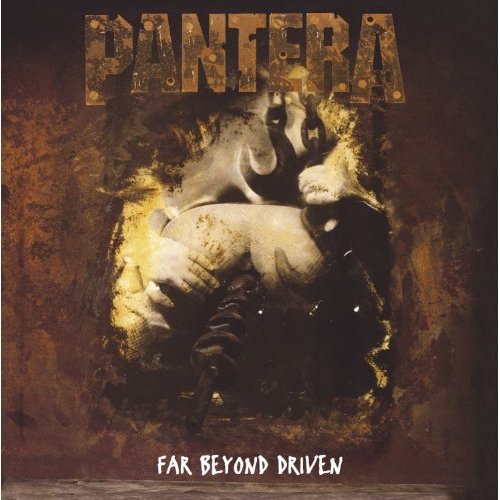
#7) Pantera – “Hard Lines, Sunken Cheeks” – Far Beyond Driven (1994)


When I first heard Pantera, I deemed them the heaviest metal band on earth. What other band could be heavier? Well, I had yet to hear death metal bands who sung about stabbing fetuses with ice picks or black metal bands who loved Satan so much that they actually burned down churches. When I did find out about those other bands, I was content to solidify myself a few rungs up on the heavy metal ladder. Pantera’s fine. Rotting Christ might be a bit much.


“Hard Lines, Sunken Cheeks”, like most of Far Beyond Driven, is incredibly methodical. The song is a seven minute dirge. Pantera eschews some of the melodies and relative lightness of a lot of thrash metal. Their music is often legitimately scary. Singer Phil Anselmo’s scowl halfway through the track would foreshadow some of his later work in various black metal groups. His menacing and off-putting grunting in the last minute of the track, coupled with the spiraling and whiny guitars, sounds particularly demonic. “Hard Lines, Sunken Cheeks” isn’t pleasant, but it arguably captures Pantera at their most evil, and may be worth a cursory listen just for that.


(It’s also amazing that an album that originally had this as a cover debuted at #1 on the Billboard album charts.)


#8) The Jayhawks – “Sioux City” – Blue Earth (1989)


May as well revisit these guys! This is such a drastic change from the last track that I think I need a minute to cleanse my palette. This sounds like a song from Aladdin to me right now.


OK. Actually, it sounds like Johnny Cash. Very simple all around, very pleasant throughout. “Sioux City” is a nice three minute ditty with a good chorus, nice changes, and good guitar parts. This is a standard “pretty good” alt-country song.


#9) Phish – “Weigh” – Slip Stitch And Pass (1997; this is a live album. “Weigh” originally appeared on Rift [1993])


You know what this song reminds me of? Driving around North Andover smoking weed and delivering pizzas as a teenager.


Slip Stitch And Pass seems antiquated now because pretty much every concert the band has ever performed is available for sale or download. I’d still argue that it is near essential for Phish fans, however, because it presents the band at a high point in their career (early 1997) playing very tight and concise songs. “Weigh” is only a few seconds longer than on Rift, but the band sounds like they’re having fun on it, working in their experimental style within the shortened time limit. Maybe that’s why the album is so interesting. Phish doesn’t sound abridged here; nothing sounds missing on “Weigh” or elsewhere on the record. It’s just that even their live performances can occasionally benefit from temperance and brevity.


#10) Steely Dan – “Throw Back The Little Ones” – Katy Lied (1975)


Steely Dan kinda sounds like a cheesy jazz lounge act. An awesome cheesy jazz lounge act. Unconventional vocals, great piano, really smart in both lyrics and arrangements. Steele Dan always manages to be genuinely and happily surprising, deviating from the path to take the song somewhere unexpected but also essential. “Throw Back The Little Ones” contains a lot of great moments like this, including a simple, wonderful piano outro that serves as the finale for both the song and the record.


John Lacey

Tuesday, May 3, 2011

I'm Checkin' 'Em Out - Songs: Ohia


Welcome to a new column at the Musicarium, “I’m Checkin’ ‘Em Out”. My friends are all big music fans, and I’m constantly being told to check this band out, listen to this album, you should buy this, etc. This column will take a look at one song by a band I’ve heard good things about and will help determine if they warrant further inspection. At the end, I’ll label the song as a “Yea” (good!), a “Nay” (bad!), or a “Meh” (don’t really give a shit to ever hear them again). You may say it’s not fair to boil an artist’s catalogue down to one random song I found on YouTube, but I say I don’t care.

Songs: Ohia
“Farewell Transmission”
Magnolia Electric Co.
2003 Secretly Canadian


To be upfront, I’ve experienced some previous songs of Songs: Ohia through Pandora. I don’t remember what any of the song titles were and I had never heard “Farewell Transmission” before, so I still think this fits within the guidelines. I do remember that I liked what I had heard. I remember those songs being minimalistic, sparse, and quite eerie, like Sun Kil Moon with the volume turned down even lower. Yearning for something, anything, to listen to that also sounds like Sun Kil Moon, I thought back to Songs: Ohia, and found “Farewell Transmission” on YouTube.


This is a complete departure from what I had heard before. The guitar riffs are grimy and dirty and endlessly repetitive, but in that kickass Neil Young sort of way. The guitar is instantly memorable, containing enough power to carry the song all the way through seven and a half minutes with only limited variation.


Much like some of those elongated, stretched out Neil Young songs that are carried by a central, repeating guitar part, the changes in “Farewell Transmission” are treated as monumental occurrences. Tangibly, the choruses are louder and are accompanied by harmonizing backing vocals. But they’re meant more as a release from those repeating portions, more as a blow off. Songs: Ohia (and principal songwriter/guitarist Jason Molina) gets this just right. The choruses boom, providing a sense that the verses are truly building to something. When the song bridges back to the verse riff, after those changes, it’s rejuvenating to hear it again. In a way, “Farewell Transmission” feeds itself.


This song and others like it prove that lyrics can stand out without Bob Dylan-level wordsmithing. The strength and simplicity of the tune work with what sound like pieced together lyrics. I’ve found myself singing the words without knowing what they mean. A passage towards the beginning shows Molina half singing and half stating the lines as a matter of fact, not unlike Stephen Malkmus of Pavement: “Someone must have set ‘em up / Now they’ll be working in the cold gray rock / Now they’ll be working in the hot mill steam / Now they’ll be working in the concrete”. With this style of singing and the terrific music behind it, the lyrics gain a level of natural authority. When Molina sings, “I will be gone, but not forever”, I believe him, though I don’t know what I’m supposed to be believing.


I can safely put this in the category of “Yea”. I’ll be purchasing this album and others just like it very soon.


John Lacey