Wednesday, February 25, 2009

The Dailies 2/25/09: Motopsycho Edition!


Hi everyone. Welcome back to another edition of The Dailies. Today, we look at one of the most highly regarded films of all time, and a little known reality show from across the pond.


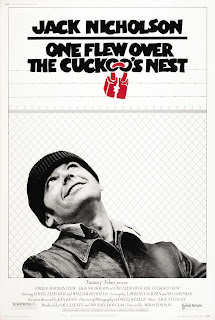
One Flew Over the Cuckoo’s Nest (1975)
Director: Milos Forman
Principle Actors: Jack Nicholson, Louise Fletcher, Will Sampson, Sydney Lassick


One Flew Over the Cuckoo’s Nest is a movie about what happens when positive change and energy is brought into an oppressively rigid social structure. Usually the consequences are great for the person who introduces this change, and often times they are physically removed or murdered. But their voices continue to ring in the heads of those who heard them. Their transformative effect is unstoppable and incalculable. One Flew Over the Cuckoo’s Nest is a mirror of the world at large in this regard; like many great men and women who spoke out against oppression and bigotry and who were summarily silenced, the hero of this film makes the same sacrifices in order to better the lives of those around him.


That hero I speak of is Randal “R.P.” McMurphy, a petty criminal who is transferred to a mental institution from a work farm where he was serving a sentence for statutory rape. McMurphy is immediately happy-go-lucky about being in the institution, perhaps presuming that his stay in the mental institute will be a walk in the park compared to a prison term. McMurphy has a friendly back-and-forth with the head doctor, and then meets his fellow “inmates”, who are involved in a roundtable discussion about one of their wives that seems to continue in perpetuity.


The other inmates of the asylum are all fantastic characters. Billy Bibbit (Brad Dourif) is a young kid with a perennial stutter and a troublesome history with his mother and with other women. Charlie Cheswick (Sydney Lassick) is a neurotic who constantly looks simultaneously befuddled and frightened. Dale Harding (William Redfield) is a pseudo-intellectual who acts as if he’s smarter and more sophisticated than the others, even though he’s probably the most helpless of them all. And then there’s the Chief (Will Sampson), who is a giant Native American mute.


The characters have their own traits that Nicholson is able to play off of. They may not be very realistic (I’d imagine that the inmates at a real-life rubber room insane asylum wouldn’t be quite so lucid), but the movie wouldn’t work without them. Though they’re a little too “pleasantly insane” for reality, but they’re all off-kilter enough to be believable at the same time.


The real joy of this film, and I imagine the reason why it’s remembered so fondly by so many, are the interactions between McMurphy and the other committed men. He brings a peaceful but manic energy into the asylum, and it transfixes and consumes the others. They’ve simply never seen a man like this before. He operates above the institution, like it doesn’t bother him at all. Sometimes, it even looks like he’s happy to be there! His riotous energy causes the others to question their situations. Why are we in here? Why can’t we make our own rules? Where are my cigarettes?


Of course, there’s a reason why they’ve been kept under control for so long (in addition to their admitted own instabilities). The ward is overlooked by the tyrannical Nurse Ratched, who rules their universes in an eerily calm yet domineering manner. The nurse controls everything about their lives, and though she says it’s for their own good, we get the sense that there are more sinister reasons at play. Nurse Ratched likes the power of pulling their puppet strings.


There’s a scene where McMurphy tries to get the others to vote with him to change their nightly routine so they can watch the World Series on TV. The others, battered into cowardice by Ratched, do not raise their hands to vote with “Mac” at first, despite desperately looking like they want to. As Mac looks on in disbelief, Ratched unfurls an evil smile; with it, she’s telling him there’s no hope left, at least not in her ward.


It wouldn’t be much of a movie if McMurphy took that advice, and he continues to bring long lost feelings of excitement and happiness into the others’ lives while simultaneously thumbing his nose at Ratched’s rules and regulations. At first, McMurphy wants to have some fun with his situation, and messes with Ratched as a ways to fool around, but it becomes more than that. He wants to show the others there’s life beyond the padded walls and the electroshock therapy. There’s booze, women, baseball, fishing; everything a guy could want! And Nurse Ratched has no right to get in the way of that. The rest of the film, up until the final climactic scene, depicts a struggle between McMurphy and Ratched for the souls of the other inmates. As Mac gives them more and more tastes of life, the inmates rediscover themselves, realize the injustices placed on them, and most importantly, become able to live freely, even within the confines of the institution.


The performances in the film are absolutely terrific. Nicholson is a tour de force; his energy is infectious as he bounces from one inmate to another in exactly the tone his role requires. His scenes with the Chief are touching and powerful, but also humorous; early in the film, he teaches a seemingly clueless Chief how to play basketball, and then involves him in a game against the institution orderlies.


The inmates are tremendous as well, with several notables making their first film appearances (Dourif, Christopher Lloyd, Danny DeVito). And Louis Fletcher won an Oscar for her portrayal of the reprehensible Nurse Ratched.


One Flew Over the Cuckoo’s Nest is one of those films I see far too infrequently, where I know I’ve just watched something special as soon as the credits start rolling. It’s a blissful perfect storm of a brilliant story and brilliant acting, and well worth its fantastic reputation.


A


Won: Actor (Nicholson), Actress (Fletcher), Director, Picture, Writing-Adapted Screenplay
Nominated: Supporting Actor (Dourif), Cinematography, Film Editing, Music-Original Score


Long Way Down (2007)
Directors: David Alexanian and Russ Malkin
Featuring: Ewan McGregor, Charley Boorman

I’ve long had a fascination with out of the way places. There’s something about the ends of the earth and the tops and bottoms of the world that speak to me. I don’t know if it’s their inaccessibility, their obscurity, or their loneliness. But there’s something attractive to me about the last places on this planet that we still don’t know much about. And though I hope I’m wrong about this, what makes them more attractive is that I’ll probably never see them. When am I going to go on a Kenyan safari or ride through the wilds of far Eastern Russia?

It’s these feelings that eventually brought me to Long Way Round (2004), a travel series that originally aired on Sky One in the United Kingdom. The premise of the show revolved around Ewan McGregor (of the new Star Wars pictures, Moulin Rouge, Big Fish, etc.) and his longtime friend and fellow actor Charley Boorman riding around the world on their motorcycles, starting in London and ending in New York City. McGregor and Boorman were assisted by support crews consisting of the directors of the series, cameramen, and medical staff. The whole experience was filmed and broken into several hour long episodes, as well as a book.

I thoroughly enjoyed Long Way Round because it took me to those places that I’ve never seen before and know nothing about, but I expected that. What I was surprised by was the likeability of McGregor and Boorman, the expertly filmed and edited episodes, and the way I felt when I was watching it. Long Way Round acted as an invitation to accompany McGregor and Boorman, not simply watch them race around on motorcycles. It became one of the most pleasant film surprises I’ve ever experienced, and when I heard they had filmed another series, I rushed it to the top of my Netflix queue.

Long Way Down sees the crew go from John O’ Groats in Scotland down to Cape Town in South Africa. It’s broken into eight hour long episodes (originally airing on BBC Two in the UK), and in each McGregor and Boorman ride through various locales, take in the local culture, camp either with local tribes or on the side of the road, and simply mosey along until they reach Cape Town. They do make visits to landmarks like the Roman Coliseum, various ruins in Tunisia and Libya, and go on safari in Namibia. These stops provide a nice change of pace from their constant riding; for the first half of the trip, they’re constantly on deadline to finish a certain number of miles each day so they don’t miss a ferry in Sudan that runs once a week.

I believe an inherent part of any successful travelogue is the camaraderie between the participants. McGregor and Boorman are true pals. They get along well and genuinely seem to enjoy each other’s company. Their friendship is infectious, and they become your compatriots and your guides in this great journey. Long Way Down is intimately filmed; the two riders keep video diaries of their experiences and footage from their crash helmets is also spliced in to each episode. The end result is that you don’t just feel like you wish you were there, but that at points you feel like you actually are.

The scenery is usually thoroughly breathtaking. Africa has abundant natural beauty, and there are no four lane highways for the pair to ride on. The roads are often made of sand and rocks, and there’s simply nothing to distract us from the fantastic landscape of the continent. Long Way Down, much like Long Way Round, makes you realize how beautiful the world is and how much there is to it. It’s a credit to the series that it legitimately makes you jealous of the crew for being able to see all of these great things and have all of these great experiences.

The real brilliant thing about Long Way Down is that it’s all couched in an adventure travel show format. It’s not simply showing these different places, but showing them in the context of the journey at large, and also showing the difficulties the pair endure in order to get to them. The two have endless crashes, nearly run out of gas, face river crossings and man-made dangers; it’s an incredibly hard undertaking. This is a travelogue of the highest order.

I hope someday I’ll be able to have an experience like the trip depicted on Long Way Down. Until then, watching this series is honestly the next best thing.

A

John Lacey

Wednesday, February 18, 2009

Forgotten Records #2: Morbid Angel - Gateways To Annihilation

Morbid Angel
Gateways to Annihilation (2000)
Earache

Preceded by: Formulas Fatal to the Flesh (1997). Succeeded by: Heretic (2003).

It's difficult to say that something from the metal underground is "forgotten," because, let's face it, most of the all-time classic metal albums, barring any Metallica, Maiden, Priest, Sabbath, AC/DC, etc. aren't even remembered by most mainstream music outlets in the first place. I can't think of too many mainstream music fans who own a copy of At the Gates' Slaughter of the Soul; however, that album is almost universally praised among metal fans who know anything about the genres. In this sense, it was difficult to come up with something that's a "Forgotten Record" from the metal underground, but I think I found a good example.

Morbid Angel have released their share of albums that are considered death metal classics, specifically their first 3 releases, Altars of Madness, Blessed Are the Sick, and Covenant (and yes, they have continued the alphabetical trend of naming their albums ever since, leading up to 2003's Heretic, their last release). These albums are some of the most influential in the entire death metal canon, as they combined the speed and intensity of Slayer with the evil, creepy harmonies of Mercyful Fate/King Diamond, and their lyrics were mostly about Satan and evil spells, at first. Once 1995's Domination was released, the band took on a bit of a more streamlined, basic approach, which took some fans by surprise. They returned to the intense speed and brutality of earlier works with 1997's Formulas Fatal to the Flesh, their first album with vocalist/bassist Steve Tucker. This album is considered a bit of a classic among die-hard Morbid Angel fans, so this is hard to consider a forgotten record. Its follow-up, Gateways to Annihilation, however, is rarely mentioned as one of Morbid Angel's greatest albums, something I take issue with.

Why was it forgotten?

Maybe it's because of the slowed-down tempos, or the clean-to-the-point-of-sounding-electronic drum tones, or because of the length of the songs, but I've never understood why any Morbid Angel (or death metal fans, in general) wouldn't like Gateways to Annihilation. Opening with the all-too-standard-in-metal ambient track, "Kawazu," Gateways is the first Morbid Angel album that doesn't open with crazy guitar riffing right off the bat. Normally I hate any sort of ambient or intro track, but on this album, its ominous tone really helps set the mood for what's to come. As soon as the first proper track, "Summoning Redemption" starts, it jumps right out of the speakers and assaults the listener unexpectedly. This song is a mid-paced, groovy death metal track, with insanely precise tremolo picking by guitarists Erik Rutan and Trey Azagthoth. I can't express how much I love the opening riffs in this song before the vocals kick in. They are melodic, atmospheric, yet crushing all at once, mainly due to Pete Sandoval's always-impressive drumming.

When Steve Tucker screams "I stand before you!", it's frightening how clear, audible, yet intense his vocals are. His work on this album is completely underrated, in my opinion, as he manages to get across the power that great death metal vocalists need, and also the clarity to understand what he's saying on every track. I haven't even gotten to the solos in this song, probably the most melodic solo laid down by Erik Rutan, followed by the typically crazy, Eddie Van Halen-on crack Azagthoth guitar work. The song is a bit long, at 7:16, but its constant twists and turns are rewarding, and yet it has a very simple, memorable song structure, with lots of repeating riffs and refrains. This is probably my second favorite Morbid Angel song, second only to "Rapture" from Covenant.

There really isn't a bad song on this album, but my favorites have to be "Summoning Redemption," "Ageless, Still I Am," and "Secured Limitations," which is a vocal duet between Tucker and Azagthoth, both delivering absolutely sick, clear vocals that go well with the song's stop-start groove. One thing I love about this album is that it maintains a consistent vibe and groove throughout. Some might find it repetitive, but I find the mid-paced numbers really give the riffs and vocals a lot of room to breathe, as well as create a lot of atmosphere that you didn't always find throughout a Morbid Angel album. There are still some signature speedy Sandoval blast-beat parts, but far less than any other Morbid Angel album.

Should it be forgotten?

Definitely not. However, having listened to this album all the way through for the purpose of writing this piece, I do now understand more why a lot of Morbid Angel fans don't appreciate it. For one thing, it doesn't sound like a typical MA release, but it does definitely sound like Morbid Angel. Trey Azagthoth's guitar work is instantly recognizable, no matter how fast or long the songs may be. I think this album is the heaviest album in the Morbid Angel catalogue, next to Covenant, and it's definitely worth re-investigating if you're a fan of Morbid Angel, or truly heavy metal in general.

I'm sure the fact that this was only the second Morbid Angel album I owned (Domination was the first) made me able to appreciate this album in its own right, and not within the context of their classic sound and catalogue. I thought that maybe I'd now dislike this album, having delved deep into their back catalogue, but I still think it's one of their best releases. I understand why it was disregarded by the MA fan base at the time, and now that original vocalist/bassist David Vincent is back in the band, I can’t see MA playing any of these songs live anymore, and that’s a shame. This album will continue to get lost in the shuffle, but it definitely should not.

A-

Matt Steele

Sunday, February 15, 2009

Forgotten Records #1: Beck - The Information


Welcome to my new feature, “The Forgotten Records”. In this column, we take a look at different albums by established musicians and bands that either didn’t sell as well as their other albums or are often overlooked when discussing that artist’s catalogue. I’m limiting the discussion to established and well-known groups here. Though it may be a crime that few have heard of Guided By Voices’ Under the Bushes Under the Stars, that’s largely due to the group’s relative obscurity and not because that particular album is overlooked. I’ll leave those discussions to Brendan Leonard and his “Hidden Classics” column.


As a for instance, Neil Young, Bob Dylan and Bruce Springsteen each have a ton of albums, right? But have you ever listened to (or even heard of) Young’s Hawks and Doves, Dylan’s Shot of Love or Springsteen’s Devils and Dust? Why not? That’s what we aim to find out. So without further adieu, Forgotten Records #1.


Beck
The Information (2006)
Interscope

Preceded by: Guero (2005). Succeeded by: Modern Guilt (2008).

Why was it forgotten?

In 2005, Beck released Guero, arguably his biggest record since 1996’s Odelay. Though his 2002 record Sea Change was a critic’s darling and is probably more highly regarded than Guero, the latter record had a number of hits over the spring and summer of 2005 and received substantial radio play. Songs like “E-Pro” and “Girl” were alternative rock radio staples in 2005 and were heard on radio and television long after the record was released. The album’s success played a big role in bringing Beck back to national prominence after lurking in the shadows for a few years (admittedly, all the while releasing strong efforts).

The Information just sort of appeared towards the end of 2006, largely out of nowhere. Guero was still on the minds of Beck fans and songs from that album had remained in circulation for so long that it still felt like Guero had just come out. The Information was released to little fanfare and mixed reviews from the musical press, and after a few minor radio hits, the album sort of faded away into obscurity. Despite one of the most innovative covers in recent memory (the cover is a blank sheet, and the album contains “colorforms” that can be stuck to the album cover in various ways, allowing you to design your own cover), the album failed to find an audience outside of Beck loyalists. So how’d that happen?

Should it be forgotten?

Short answer: no. The Information isn’t the most accessible album, even by Beck’s standards, but it is often brilliant and almost always catchy and memorable. The Information may find Beck at his most cerebral; like a lot of his efforts, there’s a sonic surrealism at play here. Sounds bombard the listener from every direction, whether they are great beats, cell phone rings, and random electronic noises. As always, Beck’s signature spoken-word pseudo-rapping ties everything together nicely. It’s a credit to Beck that he is consistently able to mix different styles and different sounds together and create coherent songs and albums.

A lot of The Information is just plain cool. It starts off with a bang, with “Elevator Music”, “Think I’m In Love” (one of the few singles from the album), and “Cellphone’s Dead” setting the foreboding but hopeful mood for the rest of the record. There’s something pleasantly dark about these songs; they’re not happy and they have an ambient quality about them, and yet they often feature bright choruses. Whenever the record feels like it’s going too far down a dark alley, it’s rescued by a timely sunny hook or chorus. Beck never lets The Information go too far in one direction or another.

The album continues with “Dark Star” and “We Dance Alone”, two of the best songs here, which are both straightforward and uncompromising. The beats on The Information are incredibly strong, and I would have been content to listen to these songs without any vocals at all. The beats and the atmosphere they create are that powerful.

I should make sure to say that The Information is a pop record. It’s just a little out there. It’s a party record in a nontraditional sense. If it’s on in the background, you nod your head and tap your feet, but if you listen closely, it makes you think. There’s a lot going on here. The Information is very atmospheric, and even for someone as notably eclectic as Beck is, that can be a turn off for a lot of people. I can see why this didn’t fly off the shelves.

The album isn’t all beats and electronica. Some of it (including the songs “Strange Apparition”, “Nausea” and “No Complaints”) harkens back to the early honky-tonk carefree Beck records, and this dichotomy of sounds is very well done. It never sounds forced or unnatural.

Unfortunately, the album does lose a little steam towards its conclusion. Its bottom third is largely a washout. “1000 BPM”, “Motorcade” and “The Information” all struck me as meandering filler and failed to make an impression. The last track, a suite called “The Horrible Fanfare/Landslide/Exoskeleton”, despite going off the deep end in terms of ambient minimalism, worked well and was a fitting conclusion to this odd and often beautiful album.

The Information is a thinking person’s record, and a hell of an experience. Unfortunately, that rarely equals sales and notoriety these days. If you like Beck at all, or if you’d like to take a strange aural journey that includes some head-nodding and foot-tapping, check this out.

B+

John Lacey

Saturday, February 14, 2009

Musings: 2/14/09

Happy Valentine’s Day, everyone! Hopefully you and your significant other are out on the town today, frolicking and having a good time, looking lustfully into each other’s eyes as you eat lunch at a ritzy city café. In fact, if you’re reading this on Saturday, February 14, you have no soul and will probably be consigned to hell for not having anyone to share this day with.

Kidding! Who am I to talk; I’m writing the fucking thing! Anyway, I have some opinions I wanted to get off my chest and I took in a documentary in the wee hours of last night that I didn’t necessarily want to write a full review on, so I decided to mash them together in the seldom seen “Musings” column.


Item #1: Steroids in baseball (and, more specifically, in A-Rod’s ass)


Like most people who follow baseball, I was a little disheartened by last week’s reports that Alex Rodriguez, the purple-lipped and mocha-faced Yankee, used steroids during his time as a Texas Ranger between 2001 and 2003. I wasn’t surprised at all, and I wasn’t shocked, and I guess I wasn’t even saddened. This is the way baseball has become, and no name that comes out from here on would surprise me one bit, even if one of my vaunted Boston Red Sox was to be outed.

I have much more of a problem with the sports media for losing their collective minds about the entire affair. Columnists from all over the country are already lobbying for A-Rod’s numbers to be stricken from the record book. One moron in New York City even advocated for the Yankees to eat the remainder of A-Rod’s 10 yr/$977 billion contract out of principle. Have these people lost their fucking minds?

I don’t remember when it became cool to act morally offended about everything, especially in something as trivial and, realistically, stupid, as professional sports. Every day there’s a new fiasco, and the “steroids in baseball” saga has created more furrowed brows and heart palpitations among reporters and uninformed fans alike than anything else that has happened in sports for the last few decades. It reminds me of something Jim Norton said on Opie and Anthony a few years ago. Reading a New York newspaper headline that equated a Yankee loss with war and murder, he succinctly pointed out the ridiculousness of it all: “One group of millionaires with sticks hit more balls over the big blue fence than another group of millionaires with sticks”. I love sports, and I especially love baseball, but will people chill out already?

I know, I know. It’s “America’s pastime”. It sends a bad message to the youth of America, those high school kids looking for that extra 50 pounds of muscle to put them over the top. I’ve heard all the arguments. And I can see where some of this is coming from. I certainly don’t think taking steroids is the right thing to do, and it does create an unfair advantage, no question.

But it seems like everyone was doing them! When you look at the Mitchell Report, and Nook Logan appears on the list (a utility-bozo extraordinaire whose best season was hitting .258 with one home run and 17 RBI’s for the 2005 Tigers), it makes you think, who wasn’t taking these things? And like the great questions of the Universe, the answer of course, is “we’ll never know”. We really will never know the extent of steroids in baseball and all of the players that used them. We just won’t. That, of course, won’t stop Johnny Newspaperseed and the ill-informed populace from nailing certain players to the wall just because they hit a lot of home runs during that time period and looked muscular. Hear that, Frank Thomas and David Ortiz? Even though we have no reason to think you’ve done anything wrong, you’re cheaters because you’re both big and hit home runs! Isn’t that just as unfair as cheating in the first place?

This argument has been made as well, but it’s a fair one. Baseball turned a blind eye to players like Mark McGwire, Ken Caminiti, Sammy Sosa and others becoming the size of rhinoceroses and shattering records. It was all fun and games then. Come to the ballpark and see this freakishly large cartoon character hit a ball 700 feet! Where was the testing then? Who was asking the questions? The baseball brass couldn’t have been that naïve. Baseball made their bed, and now they have to lie in it. They dropped the ball, and allowed all of this to happen. It’s not fair to go back now and drag certain players through the mud to show that they're “doing something about it”.

I think everyone that has the numbers should get into the hall of fame, no exceptions. If they feel the need to include a caveat that the time period was rife with steroid use, that’s fine. For certain players that tested positive, go ahead and put an asterisk on their plaques. But Rafael Palmeiro, Barry Bonds, Roger Clemens (as much as I hate him), Mark McGwire, Sammy Sosa, and now Alex Rodriguez all belong in Cooperstown. They dominated an era in which steroids were the norm. Since we have no way of proving which pitchers were on steroids and which pitchers weren’t, and since popular opinion is telling us that all home run hitting mashers from that era were on steroids, it’s only fair to assume all pitchers were on steroids, too. You can’t have it both ways.

All baseball can do is realize their mistakes and clean the game up moving forward, which is seems they’re doing. Don’t keep people out of the hall of fame, don’t reverse or take away any records, and don’t do anything stupid. They had their chance to nip the steroid problem in the bud and opted not to. That’s the way it goes.


Item #2: Metal: A Headbanger’s Journey (2005). Directed by Sam Dunn and Scott McFadyen

I was up until the wee hours last night, unable to sleep, and flipping through the channels. There were the usual infomercials, crappy movies, and sports highlights on, and I wasn’t in the mood for any of those things. I continued flipping and found this documentary, Metal: A Headbanger’s Journey, on one of the VH1 channels and I decided to take it in.

I had heard a lot about this documentary from fellow writer Matt Steele, who is an encyclopedia on all things metal. I had some interest of my own, as well. I used to listen to metal quite a bit in middle school and the beginning of high school. For whatever reason, I slowly found myself being less and less interested in the musical genre, and looking to other places for music that really spoke to me (much to Matt’s dismay). I’ve always been fascinated with metal music, however, and even though I don’t listen to it anymore, I still have an interest in it. I ask Matt about what my old favorite metal bands are currently up to and I constantly browse Wikipedia for information on some of the more ridiculous and brutal Scandinavian bands. Since this documentary promised to cover pretty much all things metal, I was hyped up for it.

Dunn, the director, interviewer, and focal point of the film, is an affable guy and a true metalhead. His goal for the film, stated at the beginning and repeatedly all the way through, is to find out why people like metal music and to look at the heavy metal culture. You see, Dunn was an anthropologist in college, and he’s also a lifelong metal fan, so put the two together and voila! You have this documentary.

As a snapshot of metal music at large or as a primer on the history of metal for someone just getting into it, this film is a godsend. It at least glosses over every genre and subgenre of metal and talks with the major players in each one. The film also looks at various metal traits and characteristics; the clothing, the sexuality of the music, etc. Dunn is entertaining enough and the bands and musicians he talks to are often colorful and insightful as well.

The film misses the mark on a few things. I don’t believe Dunn achieves his goal of finding out what draws people to metal. He simply looks at different aspects of heavy metal fans and heavy metal music, but he doesn’t really tie them all together. We get clips of metal dignitaries talking about how after a tough day, the music was always there for them, man, to which I say, “Wilco’s always there for me, too. What’s so unique about that?”

Of course, we need to talk to Dee Snider as well, and about the PMRC (Parents Music Resource Center), which sought to put heavy metal on trial. First, the PMRC is a complete joke that knew nothing about music, and I think that’s well understood by anyone with any familiarity to the proceedings. Any committee that wants to discuss KISS and Twisted Sister songs is probably a waste of money. They’re fucking hair bands, for God’s sake! Does anyone really take them seriously?

Secondly, Dee Snider might be the biggest blowhard on the face of the earth. I don’t exactly seek his interviews out, and yet I’ve probably heard him talk about his hearing with the PMRC in ten different interviews. We get it, Dee. You came to a stuffy board meeting with teased up hair and skin tight jeans on, and to their surprise, you were coherent and articulate! Thank you for saving metal.

Discussions of the PMRC lead to a look at various suicides and violence that look place and the attempt to pin those actions on heavy metal music. Of course, this line of thinking is complete horseshit, and if you’re killing yourself because Ozzy Osbourne told you to, maybe the problem isn’t with Ozzy. But I think the film misses an opportunity here to discuss something interesting. Though anyone who commits suicide or violence against someone else has serious issues, regardless of what music they listen to, why is it that a lot of these victims listened to metal? What about it speaks to disaffected youths? Is it because it’s loud, or do they actually like the music?

And finally, we get a segment about women in metal. We hear about how metal has been a boy’s club since its inception (true), and then we go into discussions about all-female metal bands like Girlschool, Vixen and Lita Ford. Of course, the film talks about these bands and what they did for women’s rights as if they’re all modern day Rosa Parks. No one was oppressing women in metal; there just weren’t any female bands for a while. And then the bands that came along really sucked. So who gives a fuck?!?

Dunn does a good job going over the history of heavy metal music and hitting the main talking points, but he does fall into the aforementioned traps that almost every metal doc falls into. It would have worked a lot better and would have been a lot more interesting if he succeeded in really showing us the metal culture and why people are drawn to it.

To reiterate, no one cares about Dee Snider and no one cares about Lita Ford.
C+
John Lacey

Tuesday, February 10, 2009

Hidden Classics #1 - Guided By Voices

Guided By Voices
Under the Bushes Under the Stars (1996)
Matador


Hello friends! My associate/enemy John “Jackie” Lacey has asked me repeatedly to take part in his blog. Finally, I acquiesced. So here is the first entry for my column which will be called “Hidden Classics.”


I’ve had the benefit of growing up with older siblings whom are much cooler than I, and throughout the years they’ve passed down some really great music, saving me from “discovering” bands such as Nickelback. One of the bands that my siblings caused me to become smitten with are the indie stalwarts Guided By Voices, led by former 4th grade teacher Robert Pollard.


GBV is hardly hidden; they’re considered along with Pavement, Sebadoh, and Dinosaur Jr. as one of the key independent bands of the 1990s. Toiling in the obscurity of Dayton, Ohio for the late 80s as well as the early 90s, Guided By Voices finally caught national buzz after the 1994 release of the indie classic Bee Thousand, their 7th full length. I love that album, adore it even, though it can be hard for many to tolerate given its Lo-Fi aesthetic and its somewhat fanciful lyrical content (i.e. “Robot Boys,” “Demons,” “Nondairy creamers explicitly laid out like a fruitcake,” etc).


This brings me to my first Hidden Classic, Under The Bushes Under The Stars. By the time it was released in 1996, GBV their trademark Lo-Fi sound had been anointed indie darlings by everyone from the New York Times to MTV’s Kurt Loder. There were heightened expectations for them to deliver Bee Thousand Part III (part II being their excellent Lo-Fi follow-up Alien Lanes). What they instead delivered was a powerful, clean sounding record, chalk full of infectious hooks and radio friendly singles. There’s hardly anything Lo-Fi about Under The Bushes..., and that apparently turned some people off. Not me, however. Granted I first heard it about 3 years after its release, but I fell in love with the record after the first spin.


With rock powerhouses Kim Deal and Steve Albini producing various tracks, Under The Bushes... is by far the poppiest record in the GBV pantheon. How songs like “The Official Ironmen Rally Song,” “Under Water Explosions,” “Drag Days,” and “It’s Like Soul Man” didn’t get significant radio play is beyond me. Pollard has an incredible pop sensibility; the dude can write a hook, but he can also be very poignant. Take for example the heart wrenching acoustic number, “Bright Paper Werewolves,” a song literally about scratch ticket junkies in Dayton, and from my experience living in Pawtucket, Rhode Island for a year, I can identify.


They want to get out of here
but they can’t find the exists
They cling to the cinema
and they can’t find security
then they finally got recognized
so they left in obscurity and misery


Pollard’s songwriting partner in crime (at this point) is fellow Daytonian, Tobin Sprout, and he too brings some of his best material to this record. “Atom Eyes” and the Albini produced “It’s Like Soul Man” are pop gems that sound like lost R.E.M. classics. While Pollard’s material dominates most of the record, Toby’s songs offer pleasing jangley excursions that still manage to fit the mood perfectly.


While there are 24 songs on this album, it moves incredibly fast (just over 54 minutes). Each track sustains the forward momentum, and when the album finishes with the gloriously bizarre “Take To The Sky,” you’ll be tempted to start the record over. The album’s first and last songs have similar (if not the same) chord progression and act as perfect bookends to a magnificent album. While Under The Bushes... might not be my personal favorite GBV album, I think it’s an album anyone who loves Who’s Next inspired Pop music should give a listen to. Maybe afterwards you’ll understand why when GBV broke up in 2004, my fellow diehards and I begged, “Don’t Stop Now.”
- Brendan Leonard

Sunday, February 8, 2009

The Dailies 2/8/09: Wrestling with Cowboys Edition!


As promised, I am back with two more movie reviews, the Oscar-nominated The Wrestler and Butch Cassidy and the Sundance Kid, the 1969 Western that popularized “Raindrops are Falling on My Head” (the less said about that, the better). Let’s get going!


The Wrestler (2008)
Director: Darren Aronofsky
Principle Actors: Mickey Rourke, Marisa Tomei, Evan Rachel Wood


The Wrestler is a film about pathetic people. Its protagonist, Randy “The Ram” Robinson, is a washed up professional wrestler who once wrestled in front of packed houses at Madison Square Garden. Now he’s sleeping in his beat-up van because he’s been locked out of his trailer for being behind on his rent. Local stripper “Cassidy” (Marisa Tomei) is too old for her profession and endures the pawing and catcalls of local bozos to provide for her young son. Randy’s daughter, Stephanie (Evan Rachel Wood), is an emotionally unstable twenty-something who has become a lesbian due in large part to Randy’s shaky and often absent fathering, giving her an extremely negative view of man and manhood. Many of the other wrestlers are decrepit shadows who struggle to walk and sign autographs from wheelchairs. The characters in this film are not happy ones.


I was very excited to see The Wrestler. I have always held an affinity for professional wrestling, and followed it closely from my days as a young boy until, gulp, 2007. In the summer of 2007, one of my favorite wrestlers, Chris Benoit, murdered his wife and son and then hung himself with an exercise machine wire. I realized then the world of professional wrestling is not a glamorous one. Wrestlers are chewed up and spit out, and very few are able to get away from it without severe physical or mental damage.


The Wrestler hits on this subject constantly. Mickey Rourke is truly fantastic and worthy of the accolades being hurled in his direction. He perfectly embodies the broken down Randy Robinson. He looks like he’s been through hell, and he probably has.


Unfortunately, The Wrestler closely mirrors what real life is like for a lot of the top stars of the 80s and 90s who now find themselves wrestling in bingo halls in front of 30 people because they don’t know how to do anything else. Randy never enjoys himself in this film; he’s never happy. He’s constantly looking for something: his youth, a return to the high life, his lost fame. In his heart, he knows those things are never coming back, but he presses on, because even the possibility that he’ll get another big break is a hell of a lot more enticing than spending the rest of his days as a nobody working at the local supermarket.


Randy’s entire life is one degradation after another. I imagine that once you’ve sold out Madison Square Garden and have truly been a star, it must be tough to scoop chicken salad at a deli counter for impatient geriatrics. Even when Randy is in the ring, where he thinks he’s “at home” and with “his family”, he’s playing to miniscule houses in front of bloodthirsty adolescents. Are these really the types of people you want to call your family?


Aronofsky makes great use of music in the film. The soundtrack is largely filled with hair bands from the 80s (Quiet Riot, RATT, etc.) Not only do these songs intrinsically recall the 80s, but a lot of those bands mirror Randy’s quest. We see bands like Poison and RATT reforming to play in front of 80 people at American Legion halls. We see their members go on reality TV and make complete asses of themselves. They’ve been to the top, and now that their time has passed, they’re willing to do anything to get back there, no matter how self-degrading and ugly.


The wrestling scenes are very well-done and very realistic. Randy wrestles a “hardcore” match with Necro Butcher, actually a real life wrestler. In hardcore matches, anything goes. You can hit the other guy with a pane of glass, barbed wire, thumbtacks, staples, you name it. We grimace each time Randy gets the staple gun treatment, because it looks so real (and very well might be).


The film is greatly buoyed by Rourke and Tomei’s performances. We’ve discussed Randy, and Tomei plays a stripper that eventually falls for him, after much cajoling. When Randy begins to put the pieces back together with his daughter and goes on a date with Tomei, we’re happy for him. When he finds even a modicum of enjoyment out of working at the supermarket deli, we’re ecstatic. But when he decides to take on a final match with his 80s nemesis, the Ayatollah, we’re devastated, because we know what it means for him long before the ending. It’s a credit to a great storyline and great performances.


There are some plot holes in The Wrestler, and some leaps of faith. The subplot with his daughter has great potential, but ultimately feels a little shoehorned. She hates him when he first arrives at her house and tries to reconcile with her, then he buys her a present and takes her out (and apologizes profusely for the wrongs he’s done), and she’s back on board. Then, he forgets about a dinner arrangement they’ve made and goes to her house in the middle of the night to apologize for that, and she never wants to see him again. I know she’s emotionally fragile, but even the fact that he went to her house at all to make amends should show that he has changed, or is at least making strong strides towards changing.


It’s also a credit to the film that we care so deeply about Randy, and it would have been nice to have an ending to the movie that was affirming for the audience and not just the character.

B+

Oscar nominations:

Won: TBA
Nominated: Actor (Rourke), Supporting Actress (Tomei)


Butch Cassidy and the Sundance Kid (1969)
Director: George Roy Hill
Principle Actors: Paul Newman, Robert Redford, Katharine Ross

I was very sad to learn of Paul Newman’s death last year, because he was one of the only actors that could excite you just by seeing his face appear on the screen. Newman has an unmistakable film presence, more powerful than Eastwood’s and perhaps rivaled only by McQueen’s (though Newman has been in better films). When Newman shows up with that never-ending twinkle in his eye and smirk on his face, you’re in for some fun.

Luckily for us, that’s the mood he sustains through the whole of Butch Cassidy and the Sundance Kid. He’s accompanied by Robert Redford, at this time a relative unknown who would go on to be one of the biggest movie stars of the 1970s. They play, well, Butch Cassidy and the Sundance Kid, a pair of smooth talking, quick shooting outlaws who rob banks and trains and prefer to use words to wriggle out of situations rather than bullets.

Butch and Sundance have robbed one train too many of Mr. E.H. Harriman, president of the Union Pacific railroad. Harriman, who is never seen on screen, hires a posse of the best lawmen and trackers in the nation to hunt down Butch and Sundance and not stop until they’ve been killed. After a few close calls and narrow escapes, Butch convinces Sundance and Sundance’s lover (Katharine Ross) to head down to Bolivia, where the banks are free for the robbing and there are no pesky lawmen to give them any trouble.

Truth be told, this film would be pretty mediocre if anyone else had been cast in these roles. The storyline is a little hollow, plot points often take a long time to develop, and at times, I thought, “This whole movie is just watching Butch and Sundance make quips and rob banks”. The only reason this boring formula works is because of how colorful Butch and Sundance are. They make the whole ordeal worthwhile.

Newman and Redford are constantly in charge in Butch and Sundance, both as actors and characters in the film. When they wink and smile and smooth talk another character, they’re doing the same to us. They’re easy to get behind and easy to root for. They’re unfazed by danger and always believe that there’s a way out of whatever predicament they’re in (and there usually is, until the very end).

This is a Western, but it’s a different kind of Western, and that’s perfectly OK. This isn’t a Clint Eastwood Western, set in a dirty, sweaty and grimy desert. This isn’t like Django, a violently over-the-top spaghetti Western. This Western has color. It’s filled with trees, streams and bushes. Even when the heroes enter areas that fit Western stereotypes, they seem to rise above their surroundings. They have a clean sheen around them, like they have a forcefield protecting them from the dirtiness and desolation around them. The Man with No Name revels in the dust and dirt; he becomes the desert. Newman and Redford merely operate in it. It’s a different take, and a refreshing one.

Newman and Redford are a lot of fun together. The Sting, which was another collaboration between the two that followed this one, is one of my favorite movies. Butch and Sundance isn’t as solid as that film is, but any chance you get to see Newman and Redford together you have to take.

B+

Oscar nominations:

Won: Cinematography, Music-Original Score, Music-Original Song, Writing-Original Screenplay
Nominated: Director, Picture, Sound

John Lacey

Saturday, February 7, 2009

Steele's Lost Report: The Little Prince 2/7/09

"The Little Prince"
Season 5, Episode 4

I was going to start recapping this season of Lost from the get-go, but I waited too long and now I don't really feel like reviewing 3 episodes all at once. If you watch the show, you know how draining it can be just to sit through multiple episodes, especially with all that's gone on this season, so I wasn't about to torture myself by having to write about them, as well. Hence, we start with episode 4, "The Little Prince."

Last week's episode, "Jughead," ended with the cliffhanger of Charlotte's nose profusely bleeding before she collapsed to the ground. We also saw how Desmond and Penny were about to get involved in the off-island drama set in 2007. What we didn't see, however, were the actions of any of the Oceanic 6 (and Ben and Ben's off-island Others). "The Little Prince" gives us a good dose of off-island material; unfortunately, most of it is centered around Kate. Now, I don't dislike Kate as a character, necessarily, I just find a lot of her storylines incredibly boring. This one, fortunately, is probably the most captivating storyline she's had since Season 1, but it was basically a convoluted way of showing us that, Hey, Ben is a manipulator.

As I predicted, the man behind the Agostini & Norton law firm coming to get blood samples from Kate to determine her relationship to her "son" Aaron was Ben Linus. Although they gave me a hell of a fake-out this week. Jack demands to see Kate, but won't exactly tell her why. Kate leaves Aaron with the visiting Sun, while she goes to meet with Dan Norton, the aforementioned lawyer. Sun, in the meantime, has a package delivered to her filled with surveillance documents and photographs of Ben and Jack (loading Locke's body into the van!), and a nice box of chocolates... oh, and underneath those chocolates is a bad-ass gun. Sun really means business, it seems, although I'm still not quite sure why she holds Ben (and Kate?) responsible for Jin's death.

Kate gets nothing out of her meeting with Norton, so she thinks following him to his meet with his client will yield more results. Jack goes along with Kate for the ride, and we see Norton meeting with CLAIRE'S MOTHER. Which, actually, wasn't that surprising, because the "Previously on Lost" montage had the clip of Jack meeting Claire's mom at Christian's funeral, but I digress. What WAS surprising, however, was what happened when Jack had a conversation with Mrs. Littleton (his stepmother, of sorts). He was on the defensive from the get-go, and started talking about how everything they were doing was to protect Aaron. "Who's Aaron?" Mrs. Littleton replied, and oh shit, we realize she is not the client after all. At that point, it became obvious to me that Ben was behind this, and it became obvious to Kate as soon as she saw Ben and Sayid get out of the van when meeting with her and Jack at the rendezvous point. Jack, feeling that Ben is on his side and would never hide something like that from him, is surprised when Ben simply put, "It was me, Jack." That about ends the off-island shenanigans, except for Sun, with a sleeping Aaron in the backseat, menacingly looking on from afar, with aforementioned pistol in tow. Shit's about to go down... next week, unfortunately.

Back to the on-island goodness in the year... actually, we don't even know what year they left off in last week's episode. The bomb wasn't there any more, but it could have been way before 1954, or way after it was buried. All we know is that Charlotte is still passed-the-F-out, and Daniel's shirt seems to have absorbed all of her nose blood. Sawyer starts immediately harassing Faraday about what is happening to her, but Juliette calls him off. She then politely asks Daniel if he knows what is happening, and he expresses that he thought it might. She does eventually come to, and doesn't know where she is or who Daniel is. Once he says his name, however, she smiles and instantly knows what is happening, leading me to believe that Daniel is her "constant."

Locke starts to think that going back to the Orchid station is the only way to try and stop what's happening to Charlotte (and Miles, although he keeps that from everyone but Faraday. Faraday then tells him it might be because of the amount of time he and Charlotte have spent on the island. This confuses Miles, who has only been on the island for two weeks, yet the time they spent focusing on Dr. Chang's baby in the season opener leads me to believe that Miles was born on the island.) Before they can even get anywhere, they're met with another flash, this one leading them to November 1st, 2004, (thank you, Lostpedia!) the night Boone died and the hatch lit up.

Anyone who recalls the episode where Boone met his demise also realizes that Claire gave birth to Aaron at the same time. Well, we don't get a flashback of that event, necessarily, but we get Sawyer literally seeing Kate assist Claire in giving birth to Aaron, just feet in front of him. Sawyer does not intervene, however, because “What's done is done.” Locke inspired that outlook in Sawyer, after telling him how he had banged on the hatch door out of frustration when he was unable to save Boone, looking for some sort of purpose. “I needed that pain, because I wouldn't be where I am today without it.” The islanders head back to the beach following another flash as Sawyer looks on at Kate, and then nothing. When asked by Juliette what he saw, he replies that it doesn't matter, because it's gone. I gotta be honest. I never liked the Kate/Sawyer love story, and felt really pissed at her when she banged him in one of the Others' cages. After the way Josh Holloway played the heartbroken one last night, I almost want him, not Jack, to end up with Kate. Upon arriving at the beach, they come across their camp, somewhat in tact, but ransacked of supplies. The zodiac raft that they planned to take to the other side of the island is also gone. In its place is a large canoe, with a mysterious bottle of water from an Indian airline inside of it. My guess? The Oceanic 6 flew on said airline and crashed into the island.

This theory is further enhanced by the islanders being shot at by dark figures in the distance, also in a large canoe. I'm thinking it was either the future versions of themselves, or Jack and his buddies doing the shooting. Sawyer shouts “Thank you, God!” as another flash approaches, saving them from danger, until they reappear in the middle of a vicious ocean storm. “I take that back!” = funniest line of the night. The islanders get to land, where Sawyer and Juliette have a nice, quiet moment. That is, until Juliette gets a nosebleed. LOST!

And how could I forget maybe the jaw-droppingest moment of the night? Caught in the same storm as our islanders is a life raft full of French speaking people. They approach a body floating on a piece of lumber and drag him onto their raft. When they turn him over, we recognize him instantly, and it's Hurley!? WTF?

WRONG. It's Jin! Jin lives! Jin lives!

The next morning, Jin wakes on the beach, again not understanding anything anyone's saying. He realizes one of the young women speaks English, and he does “a little.” He tells her his name is Jin, and she introduces herself as a very young, very pregnant Danielle Rousseau. Wow, wow, wow.

The preview for next week's episode had Ben telling Sun he could prove that Jin was still alive, along with Locke being lowered by rope down into what I assume is the remains of the Orchid station. I cannot wait.
A-

Matt Steele