Tuesday, May 10, 2011

The Random Ten #23


These are easy and fun to write, so here you go! I’m also going to start embedding what I consider to be the best or most interesting song into the article, depending on YouTube availability. It only took me 2 ½ years to figure out how to do that!

#1) Led Zeppelin – “The Rover” – Physical Graffiti (1975)


As seen in Random Ten #21. Let’s try again.


#1) Bob Marley & the Wailers – “One Love/People Get Ready” – Exodus (1977)


Ahh, new! And incredibly famous. You ever hear this one?


Bob Marley gets an unfortunate bad rap because every asshole in college has that mosaic poster of him smoking a joint (I had it, too!). He was somehow morphed into a posthumous crusader for white, teenaged pot smokers and his music has become subsidiary to that ever-present image of him with the weed smoke coming out of his mouth. And that’s too bad, because Bob Marley has a lot of really good music that will be dismissed by many offhand simply due to the nature of his fans. Just like a great number of rappers and bands like U2 and Dave Matthews Band, an artist doesn’t necessarily suck just because a bunch of morons follow them. Except 311. They fucking blow.


#2) Dave Matthews Band – “#41” – Listener Supported (1999; this is a live album. “#41” originally appeared on Crash [1996])


Speaking of the well-dressed, flatbrim-hatted, “I totally like all music, brah, even though I listen to two bands” devil.


You know what this song reminds me of? Driving around North Andover smoking weed and delivering pizzas as a teenager. I was so (not) awesome. People looked at my shitbox Buick and heard “#41” blaring out the windows and must have thought, “That guy is a fucking loser.”


But to those hypothetical people of the past I say that “#41” is a really good song. Matthews can come across as creepy and desperate in some of his love songs, but in “#41” he mostly hits the right notes. Maybe some of his and the band’s success can be attributed to his “everyman” voice. He’s a crooner, but he doesn’t have the voice for it. This works in his favor in this case because he sounds like any other person in love except with the ability to articulate it. The simple guitars and the horns don’t allow the track to delve into uncomfortable sappiness, so it never feels completely emasculating or embarrassing. The prerequisite jam, however, is really, really, boring. This is a good pop song; I know it’s live and everything, but the jamming here doesn’t elaborate or improve on anything. It just makes me forget the good parts.


#3) U2 – “Mofo” – Pop (1997)


Just because I mentioned these bands doesn’t mean I want to listen to them. You may remember Pop as the album that had that song where the members of U2 dressed up like the Village People for the video. That’s about all I remember of it. I want to say critical opinion was dismal, but I’m sure the album sold like a hundred million copies anyway.


I really want to listen to the rest of this record, because if all of it sounds like “Mofo” it is amazing that one of the biggest rock bands in the world escaped this relatively unscathed. I think U2 was going for some sort of house/trance/techno/rock hybrid here, which just sounds really weird from them. I appreciate that they had the balls (and the status) to try something like this, but “Mofo” is not a pleasant listen. This sounds like the music you hear during some futuristic fight scene in a shitty movie like Underworld. Not good at all, but an interesting one-time curiosity.


#4) Beck – “The Horrible Fanfare/Landslide/Exoskeleton” – The Information (2006)


I feel like I wrote about this song in a Random Ten once but I can’t seem to find that. This does, however, give me cause to dust off my old column on The Information. Recycling!


Where U2 sounds odd trying out radically different forms of music, Beck sounds at home, no matter what he does. He could release an album of Cat Stevens covers playing nothing but a Theremin and no one would bat an eye. I bet it would be awesome, too.


You may guess this track is split into a few movements. “The Horrible Fanfare” is the first, and it lives up to its billing. Airy, dark and haunting, the first two minutes of the track sound like a drum machine death march. “Landslide” is more straightforward and inviting, but still lumbers along slowly. Bits of light are allowed through only via Beck’s up tempo vocals and some piano flourishes. “Exoskeleton” then returns the track to insanity, featuring ambient noises and spoken word dialogue about God knows what.


What’s cool about Beck is that he never comes off as pretentious. This song is a great example. All sorts of crazy shit is happening, and though this isn’t a great listen, none of his embellishments induce an eye roll or an exasperated “jeez”. The end of the song with the disembodied male voice talking about spacecrafts and exoskeletons over beatless droning? That’s just Beck.


#5) Dr. Dog – “I Hope There’s Love” – We All Belong (2007)


Dr. Dog has a great feel for melody and how even the simplest vocal harmony can make a song memorable. “I Hope There’s Love” resembles a lo-fi Beatles in this respect; overtly simple but incredibly effective. The entire song is nothing but tinny vocals and what sounds like one of those terrible children’s keyboards playing an accordion tone. It works.


#6) Bone Thugs-n-Harmony – “Friends” – The Art Of War (1997)


The Art Of War is one of my favorite records ever because it was such a colossal misstep. After the success of E. 1999 Eternal (“Crossroads”, “1st Of Tha Month”), Bone Thugs decided that the best follow up would be a double disc record, forcing listeners to slog through 28 songs. A double-disc usually isn’t a good idea for even the most prolific, proggy, “intelligent” rock group, but for a rap combo whose primary subject matter is how much weed they smoke? Death. They never truly recovered from this.


Before I started the track I was hoping they might incorporate the hook from Whodini’s 1984 hit of the same name, and they do! Of course, that makes me want to hear that other song and not this one. When the beat is right and the hook is memorable, Bone Thugs can actually sound pretty good. But when the indecipherable lyrics are piled on top of a boring melody, as happens here, patience and tolerance don’t last long.


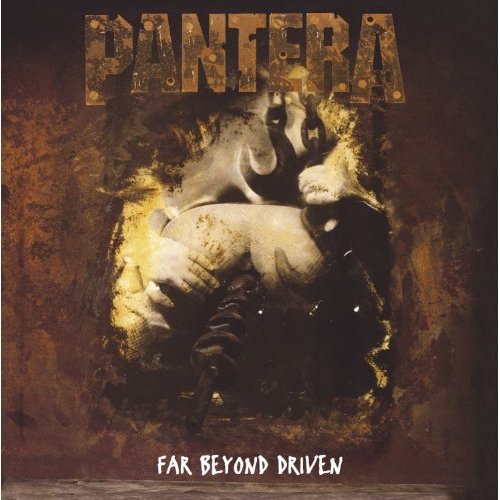
#7) Pantera – “Hard Lines, Sunken Cheeks” – Far Beyond Driven (1994)


When I first heard Pantera, I deemed them the heaviest metal band on earth. What other band could be heavier? Well, I had yet to hear death metal bands who sung about stabbing fetuses with ice picks or black metal bands who loved Satan so much that they actually burned down churches. When I did find out about those other bands, I was content to solidify myself a few rungs up on the heavy metal ladder. Pantera’s fine. Rotting Christ might be a bit much.


“Hard Lines, Sunken Cheeks”, like most of Far Beyond Driven, is incredibly methodical. The song is a seven minute dirge. Pantera eschews some of the melodies and relative lightness of a lot of thrash metal. Their music is often legitimately scary. Singer Phil Anselmo’s scowl halfway through the track would foreshadow some of his later work in various black metal groups. His menacing and off-putting grunting in the last minute of the track, coupled with the spiraling and whiny guitars, sounds particularly demonic. “Hard Lines, Sunken Cheeks” isn’t pleasant, but it arguably captures Pantera at their most evil, and may be worth a cursory listen just for that.


(It’s also amazing that an album that originally had this as a cover debuted at #1 on the Billboard album charts.)


#8) The Jayhawks – “Sioux City” – Blue Earth (1989)


May as well revisit these guys! This is such a drastic change from the last track that I think I need a minute to cleanse my palette. This sounds like a song from Aladdin to me right now.


OK. Actually, it sounds like Johnny Cash. Very simple all around, very pleasant throughout. “Sioux City” is a nice three minute ditty with a good chorus, nice changes, and good guitar parts. This is a standard “pretty good” alt-country song.


#9) Phish – “Weigh” – Slip Stitch And Pass (1997; this is a live album. “Weigh” originally appeared on Rift [1993])


You know what this song reminds me of? Driving around North Andover smoking weed and delivering pizzas as a teenager.


Slip Stitch And Pass seems antiquated now because pretty much every concert the band has ever performed is available for sale or download. I’d still argue that it is near essential for Phish fans, however, because it presents the band at a high point in their career (early 1997) playing very tight and concise songs. “Weigh” is only a few seconds longer than on Rift, but the band sounds like they’re having fun on it, working in their experimental style within the shortened time limit. Maybe that’s why the album is so interesting. Phish doesn’t sound abridged here; nothing sounds missing on “Weigh” or elsewhere on the record. It’s just that even their live performances can occasionally benefit from temperance and brevity.


#10) Steely Dan – “Throw Back The Little Ones” – Katy Lied (1975)


Steely Dan kinda sounds like a cheesy jazz lounge act. An awesome cheesy jazz lounge act. Unconventional vocals, great piano, really smart in both lyrics and arrangements. Steele Dan always manages to be genuinely and happily surprising, deviating from the path to take the song somewhere unexpected but also essential. “Throw Back The Little Ones” contains a lot of great moments like this, including a simple, wonderful piano outro that serves as the finale for both the song and the record.


John Lacey

Tuesday, May 3, 2011

I'm Checkin' 'Em Out - Songs: Ohia


Welcome to a new column at the Musicarium, “I’m Checkin’ ‘Em Out”. My friends are all big music fans, and I’m constantly being told to check this band out, listen to this album, you should buy this, etc. This column will take a look at one song by a band I’ve heard good things about and will help determine if they warrant further inspection. At the end, I’ll label the song as a “Yea” (good!), a “Nay” (bad!), or a “Meh” (don’t really give a shit to ever hear them again). You may say it’s not fair to boil an artist’s catalogue down to one random song I found on YouTube, but I say I don’t care.

Songs: Ohia
“Farewell Transmission”
Magnolia Electric Co.
2003 Secretly Canadian


To be upfront, I’ve experienced some previous songs of Songs: Ohia through Pandora. I don’t remember what any of the song titles were and I had never heard “Farewell Transmission” before, so I still think this fits within the guidelines. I do remember that I liked what I had heard. I remember those songs being minimalistic, sparse, and quite eerie, like Sun Kil Moon with the volume turned down even lower. Yearning for something, anything, to listen to that also sounds like Sun Kil Moon, I thought back to Songs: Ohia, and found “Farewell Transmission” on YouTube.


This is a complete departure from what I had heard before. The guitar riffs are grimy and dirty and endlessly repetitive, but in that kickass Neil Young sort of way. The guitar is instantly memorable, containing enough power to carry the song all the way through seven and a half minutes with only limited variation.


Much like some of those elongated, stretched out Neil Young songs that are carried by a central, repeating guitar part, the changes in “Farewell Transmission” are treated as monumental occurrences. Tangibly, the choruses are louder and are accompanied by harmonizing backing vocals. But they’re meant more as a release from those repeating portions, more as a blow off. Songs: Ohia (and principal songwriter/guitarist Jason Molina) gets this just right. The choruses boom, providing a sense that the verses are truly building to something. When the song bridges back to the verse riff, after those changes, it’s rejuvenating to hear it again. In a way, “Farewell Transmission” feeds itself.


This song and others like it prove that lyrics can stand out without Bob Dylan-level wordsmithing. The strength and simplicity of the tune work with what sound like pieced together lyrics. I’ve found myself singing the words without knowing what they mean. A passage towards the beginning shows Molina half singing and half stating the lines as a matter of fact, not unlike Stephen Malkmus of Pavement: “Someone must have set ‘em up / Now they’ll be working in the cold gray rock / Now they’ll be working in the hot mill steam / Now they’ll be working in the concrete”. With this style of singing and the terrific music behind it, the lyrics gain a level of natural authority. When Molina sings, “I will be gone, but not forever”, I believe him, though I don’t know what I’m supposed to be believing.


I can safely put this in the category of “Yea”. I’ll be purchasing this album and others just like it very soon.


John Lacey

Tuesday, April 19, 2011

From the Library #3: Harry Nilsson - The Point!


Harry Nilsson
The Point!
1971 RCA Victor


My travels to the library are good for my music collection in a few ways. The first, obviously, is that I’m adding to it, checking out albums that are either missing from my collection or albums I’ve been meaning to take a listen to. In the first and second “From the Library” columns, I discussed records by two of my favorite artists that had somehow slipped through my anal-retentive, perennially accumulating grasp. But the library is also good for stockpiling music; creating a nearly never ending current of new, good music that I can turn to. Some of it I’m completely unfamiliar with, like the subject of today’s “From the Library” column, Harry Nilsson. I vacillated between writing about Nilsson and another famed singer/songwriter, Tom Waits, both of whom I’ve never listened to and know nothing about. I’ve heard tremendous things about both, but Nilsson’s album The Point! is a new checkout from this past week, and being fresh in my mind, it won out.


A cursory glance at Wikipedia (which also provides many of the album facts in this and the following paragraph) tells me that The Point! is a children’s tale about a boy named Oblio. Oblio lives in a mythical place called the Pointed Village, where according to law everything must have a point, including its residents. Oblio has a round head, and this causes some problems for him and lessons are learned. Nilsson apparently said of the how he came to this idea, “I was on acid and I looked at the trees and I realized they all came to points, and the little branches came to points, and the houses came to a point. I thought, ‘Oh! Everything has a point, and if it doesn’t, then there’s a point to it.’” This whole project may sound like the delusions of a drug fueled madman, but I’ve heard dumber ideas for a concept album before.


An animated film of the same name was released in 1971, airing on ABC. Dustin Hoffman originally voiced the narrator, who was also the father of Oblio in the story. Mike Lookinland (Bobby Brady) performed the voice of Oblio. Later versions had to be released due to legal issues, with both Ringo Starr and Alan Thicke voicing the narrator in subsequent editions. There was even a 1975 live musical based on The Point!, with lead roles in the London production being performed by two members of the Monkees. Sadly, on the album version, Nilsson handles narration duties.


As someone who has never listened to Harry Nilsson, he showcases a very distinct Beatles sound throughout The Point! He had been a close friend to members of the Beatles, particularly John Lennon, and Nilsson’s succinct craftsmanship owes them a debt of gratitude. The album features a number of songs tied together by one to two minute long narrative tracks, where Nilsson tells Oblio’s tale and tries to give the listener a sense of what these songs are about. It doesn’t always work. Though the music is always pleasant, the story goes wayward several times. After Oblio is kicked out of the Pointed Village for being a roundhead, the following songs are about bodies decomposing in the sea and about how Thursdays are the craziest days of the week. Maybe it’s designed for kids and they eat this shit up, I’m not sure. But it didn’t make a whole lot of sense to me even in the context of the simple storyline.


The music is always good but never attention getting. Third track “Me and My Arrow”, middle-of-the-record cuts “Think About Your Troubles” and “Thursday (Why I Did Not Go to Work Today), and penultimate track “Are You Sleeping?” are all quite charming 70s pop songs but really don’t radiate well and they sound dated. The album does succeed in creating a dreamlike and cheerfully otherworldly atmosphere, however, suitable for the fantastical subject matter of the record and the fantastical state of mind Nilsson was in when he came up with these ideas. The Point! comes off as a second-rate cross between Dr. Seuss and Sesame Street, but it does efficiently mimic enough of their elements to create an enjoyable experience.


Though The Point! doesn’t fit together very well, there is a real sense of adventure on this record. The subject matter obviously contributes, but these songs, while somewhat flat, are playful, whimsical, and charming. As a unit, The Point! works to at least create a fun and unique atmosphere unlike much else I’ve seen in pop.


C+


John Lacey

Wednesday, April 13, 2011

Commercially Viable - Golden Corral


I really don’t like television advertisements. I find them all to be some degree of insulting or annoying. They continually act as a barrier, preventing me from watching the program I’m trying to watch. I’ve never understood the anticipation of the new Super Bowl ads; they’re fucking commercials! We don’t like them every other day of the year. Why do we pretend to care about the newest talking dog Bud Light commercial?


In the best of cases, commercials are white noise. They pass without incident and without fanfare. But in the worst of cases, a television ad is an affront to me personally as a consumer or even a person. “Commercially Viable” will discuss those commercials that make you lunge for the remote whenever they appear, or cause you to talk to yourself about just how stupid that commercial is.


Our first entry is a 2010 (I think) Golden Corral ad. Golden Corral is a chain of Applebee’s-esque casual dining restaurants found throughout the United States. Judging by the Golden Corral website store locator, Golden Corral seems to be most prevalent around the southeastern seaboard, with a large number of locations in North Carolina, Georgia, and Florida. Thankfully there’s only one location here in Massachusetts, located in the western city of Springfield, a city I don’t envision wanting or having to go to again.


This is only a thirty-second spot (there may have been a longer one originally that was cut to this length), but boy, does it pack in the shitty. We open with some fat jerk, his “just pretty enough for a commercial” wife and his two middle-school aged children standing at a microphone. The premise of the ad is that the man and his family want a lot of good food with all the fixin’s, and they’re whittling down all of the available choices by asking a series of inane questions to a group of people who represent different restaurants. Think of it as a gluttonous, high-cholesterol version of “Guess Who?” If the restaurant doesn’t have what they’re looking for, POOF! They fall through a trap door, and the fat guy and his wife continue to ask their rib-related questions to the others.


The father in the commercial states, “We’re in the mood for baby back ribs for dinner tonight. Who’s got ‘em?” Is this normal? All four members of a family want the same thing, and beyond that, they all want to eat ribs? I can see the fatso father wanting ribs, but the dainty and skinny wife? The twelve year old girl? They want ribs too?


After eliminating some of the self-respecting franchises who know their limitations and don’t try and pull off fifth-rate ribs, moron throws out this gem: “And we’re hungry, so it’s gotta be all you can eat.” All you can eat? First of all, the father in the ad definitely shouldn’t be eating all-you-can-eat anything, except maybe grass. He’s visibly overweight and would probably be a heart attack risk if he actually tried to gorge himself at Golden Corral’s all-you-can-eat rib buffet extravaganza.


But secondly, who the fuck is so ridiculous as to require unlimited food for their dinner? Really? The normal serving of ribs just can’t possibly satiate you? I really don’t think there is anyone, even the fattest people in this country, who legitimately think like this. There is no one thinking, “For dinner tonight, I want ribs. But I don’t want to worry about portions or anything. What I’d like for dinner is all of the ribs I can possibly eat.”


Never mind that even a normal plate of ribs would probably be too much for the wife and the two small children. They need all-you-can-eat ribs too, apparently, because now mom chimes in. You see, they don’t just want ribs, and they don’t just want the all-you-can-eat variety. They want them as part of an endless buffet (which I imagine includes an assortment of microwaved vegetables and other meats), and they want them for ten dollars.


Ahem.


If you’re the kind of person who actually thinks, “I’d like all-you-can-eat ribs for dinner tonight”, are you really going to pull punches when it comes to cost? I like to imagine this family rib shopping, calling every restaurant within fifty miles asking about rib availability and pricing. Dad hits the jackpot: “Honey, Longhorn Steakhouse has a rib buffet!” But mom, ever the wet blanket, responds, “Is it around $10? Remember, we’re on a budget.” Then dad solemnly hangs up the phone, cursing Longhorn Steakhouse and its $15 rib festival, and reopens the phonebook.


Our discussion of this commercial wouldn’t be complete without mentioning the wormy Golden Corral spokesman, who smugly drops his dumbass catchphrase (“Thanks for dropping by”) in his stupid Alan Seuss voice when the family finds that their idiotic cuisine requirements can be met by his restaurant. I don’t have anything witty to say here, except that his catchphrase, his stupid face, and the way he raises his eyebrows make me hate this commercial about fifty thousand times more.


We go through a little spiel about what the offer actually is, come on down to Golden Corral, blah blah bullshit bullshit. Thankfully, we get one more scene of the family wolfing down this swill, providing the dad an opportunity to channel Jay Leno with his incredulous “Ten bucks??? Glad we dropped by! (hahaha)” pseudo-joke.


This commercial is the perfect storm. It’s like being on the Hindenburg, except that you also have yellow fever. The family is awful. The food looks awful. The wormy guy is awful. The premise is absolutely god-awful. And since Golden Corral seems to be the official sponsor of MLB Network, and they have now produced several of these types of commercials, the idea of having to see them multiple times a day is frightening.


John Lacey

Monday, April 4, 2011

The Random Ten #22


#1) String Cheese Incident – “San Jose” - On The Road: Atlanta, GA 4/21/02 (2002; this is a live album, the song originally appeared on A String Cheese Incident [1997])


Count me as someone who really likes songs named after places. “San Jose” appears on the second String Cheese Incident record and is here presented from an April 2002 concert.


I wrote two Random Ten’s ago that I’m always happy to see String Cheese Incident show up on a Random Ten. “San Jose” ensures that this sentiment remains true. A lot of String Cheese Incident songs sound exactly the same, and “San Jose” sounds an awful lot like nearly every other song I’ve ever heard from this band. I’m not going to call String Cheese Incident one of my favorite groups, but that similar sound is always effective and pleasant, and in small doses it can be borderline euphoric.


“San Jose” runs nearly ten minutes, and contains a nice repeating piece where the music stops entirely to allow the audience to yell “Woo!” in unison. String Cheese Incident is good at changing up their winning but redundant formula just enough so that their songs have some new hook or something just different enough to make you care. They aren’t musical geniuses, but it’s fun, so who gives a shit?


#2) String Cheese Incident – “Texas” – Born On The Wrong Planet (1997)


Uh, OK. Hey, it’s another String Cheese Incident song! And it’s also named after a place! And guess how long it is?!?


I just blew my String Cheese bead, so I don’t have a lot of interesting things to say about them right now. I will say “Texas” is a more engaging song than “San Jose”, taking a more subdued tone and telling more of a story. It benefits from being a tad darker, but String Cheese Incident doesn’t fully commit to that direction, leading to a bizarre and disharmonic chorus which begins on a dark note and ends on a lighter one. A Spanish sounding jam basically closes out “Texas”, fitting rather awkwardly with what came before. It’s not great, but “Texas” does see String Cheese Incident trying to expand their sound, and it’s hard to fault them for that.


#3) Red House Painters – “Mistress (Piano Version)” – Red House Painters (Rollercoaster) (1993)


Red House Painters was the original band of singer/songwriter Mark Kozelek, now touring and releasing records under his own name and the Sun Kil Moon moniker. I’ve gushed on this blog over Sun Kil Moon and Kozelek’s work in general, and I’m sure you can find some of those articles on the blog history to the right. The gist of it: I think he’s fucking awesome.


But he ain’t for the faint of heart. Kozelek is morose, endlessly sentimental and regretful, and his music reflects that. His attitudes help make his music so good, but it’s certainly not for everyone, and probably should be listened to alone if only so others don’t think you’re a psychopath or (if male) hopelessly effeminate.


“Mistress” is included elsewhere on Red House Painters as a rock number (hence this different “piano version”) and here Kozelek slows everything down. His piano is the only instrument on the track, and during the chorus it builds on itself and provides a faint tease that it might take off. Wisely, it doesn’t, and what we’re left with is a triumph on an album full of them.


#4) Oasis – “Stop Crying Your Heart Out” – Heathen Chemistry (2002)


Out of twenty-two Random Tens, Oasis has appeared on five. I feel like they’ve been showing in every recent column. If we’re applying Musicarium sabremetrics, Oasis is appearing at a 23% clip, causing me to curse myself for taking all of their albums from a friend’s hard drive for free years ago.


I’ve written so much about them that there’s not a lot more to say. Big, dumb rock band, usually sound good, etc. So instead of rehashing that, I’ll write about how lame “Stop Crying Your Heart Out” is. Adding strings does not add emotional gravity to your music. This sounds like a retread of the warmed over stuff they were doing two years prior on Standing On The Shoulder Of Giants. The chorus is mind-numbingly cheesy and the whole exercise has the unmistakable top 40 musk of Matchbox 20 all over it. Crappy, crappy, crappy. Of course, because this is Oasis, the song has to be at least five minutes long.


#5) Modest Mouse – “What People Are Made Of” – The Moon & Antarctica (2000)


“What People Are Made Of” is the final track on perhaps the finest Modest Mouse album of all. It’s a perfect closer, at times abrupt, chaotic, deliberate, even delicate, taking the varied components of the record itself and encapsulating them into one final song.


I’ve always admired Modest Mouse’s raw yet processed power. Modest Mouse songs like this one and like countless others seem on the surface to be completely out of control, but there is order and structure. There are hooks, strong choruses, movements that make sense for a band writing thoughtful but traditional rock music. This might be hard to hear within their oft-maniacal music, and “What People Are Made Of” is a good place to listen for it.


#6) The Black Crowes – “Jam #2” – The Band Sessions (1997; not an official release)


“The Band Sessions” were studio recordings from 1997 which were supposed to result in a new album. The band did release an album, By Your Side (1999), after cancelling the recording sessions for what was to become Band and scrapping what songs they had put together. Many of those songs ended up being released on the Lost Crowes compilation album (2006), which rounded up a number of those lost songs and put them out officially.


You can probably guess that “Jam #2” never made it onto Lost Crowes. It’s a two minute and forty-five second jam, most likely unrehearsed and created on the spot. I don’t really see the need to listen to this again.


#7) The Smashing Pumpkins – “1979” – Mellon Collie And The Infinite Sadness (1995)


Ahh, Christmas 1995. I got a boom box and my first CD’s, among them Mellon Collie And The Infinite Sadness. The others? A Boy Named Goo, some shitty Edwin McCain album, Sixteen Stone, and I think the first Silverchair record.


I remember “1979” hadn’t been released as a single by that time, so I listened to lead single “Bullet With Butterfly Wings” thirty times in a row. For a twelve year old, Mellon Collie was a daunting task, boasting twenty-eight songs split over two discs. I poked around, not caring for much else that I found because I would only give each song three seconds to grab me. But I did find “1979”, and when it broke big, it was “my song” the one I found and appreciated before anyone else.


It’s still a great song, sixteen years later. I have a difficult time divorcing the song from the video (you know, the one with all of the kids making out and going to parties and jumping into a pool or something). The song worked great with that video, which was about teenagers being teenagers and doing teenage things. Even though the record was released four or five years before I reached my partying teenage years, I now listen to the song and picture myself, as a teenager, in that video. Talk about staying power.


#8) Drive-By Truckers – “Zip City” – A Southern Rock Opera (2001)


One of the best songs by one of the best bands on earth. “Zip City” is narrated by a Southern teenage boy, who relays the story of his courtship of a younger girl and wondering why he wastes his time. The song is absolutely punishing in its delivery, managing to be both catchy and bleak at the same time, the perfect tone for its subject matter.


The real wonder of “Zip City” is in its lyrics, when the narrator tells the girl exactly what he feels towards her (pardon the formatting, this website is awful and I'm actively looking for a new one):


Maybe it’s the twenty six mile drive From Zip City to Colbert Heights


That keeps my mind clean, Gets me through the night


Maybe you’re just a destination, A place for me to go,


That keeps me from having to deal With my seventeen year old mind all alone


So keep your drawers on girl, It ain’t worth the fight


By the time you drop them I’ll be gone And you’ll be right where they fall the rest of your life


Singer/guitarist Mike Cooley turns in the finest performance of his career on “Zip City”, with his whirling guitar solos adding weight to every word. It’s a must-hear.


#9) moe. – “Buster” – No Doy (1996)


Yeah. Going from “Zip City” to “Buster” is like going from an Aston-Martin to a Geo Tracker. Though I’m predisposed to be upset at moe. and “Buster” because they are following “Zip City”, I’ll do my best to be impartial.


moe., as a jam band, certainly shares some traits with the twice aforementioned String Cheese Incident. “Buster” is a light and airy song akin to String Cheese’s “San Jose” that we heard earlier. I’d consider moe. to be a more interesting group than String Cheese Incident, because they’re less tentative to experiment with shifts in their tone and are willing to try new things. Their follow up to No Doy, 1998’s Tin Cans And Car Tires, shows moe. travelling as far across the musical spectrum as the confines of being a jam band will allow them to, yet they retain the same signature sound they had developed for themselves previous to that release.


One thing I’ve often wondered is why jam bands release studio records at all. “Buster” sounds alright, and it might bring the house down live, but in the context of a record it’s a tedious bore. Jam bands have released strong, cohesive records (see Phish: Farmhouse, Billy Breathes) and also putrid, not-so-cohesive records (see Phish: Joy, Undermind). But I’d rather a band try something new, even to see it fail, than release an immediately superfluous album. If No Doy’s version of “Buster” is more polished but less engaging and ultimately less fun than a live version, why do I need this?


#10) Sonic Youth – “Eric’s Trip” – Daydream Nation (originally released 1988; this is a live version of the song released on the deluxe reissue of the album in 2007)


I’ve heard Sonic Youth is really good from a whole lot of people. I don’t know this firsthand because for some reason I’ve never bothered to listen to them. Every other time I’ve given a good listen to a heavily influential indie rock band, from Pavement to Dinosaur Jr. to Guided By Voices, I’ve ended up liking them, so I’d imagine this would be no different.


I don’t know if this live version of “Eric’s Trip”, recorded in Dusseldorf in 1989, is the place to start. It’s very sloppy and noisy, and though I imagine that’s part of Sonic Youth’s charm, it’s hard to get a good handle on them in this environment. I appreciate a blistering three-minute romp as much as anyone, however, and I admire the energy and primitive hooks evident in this performance. There’s definitely enough here to warrant further inspection.


John Lacey

Thursday, March 31, 2011

The Dailies 3/31/11: No One Who Speaks German Could be an Evil Man!

Once (2006) – B


· Directed by John Carney


· Starring Glen Hansard, Markéta Irglová


· Awards: Won – Best Original Song


· Once is a charming romance-musical, with main characters Glen Hansard (guitarist and vocalist of real-life Irish rock band the Frames) and Markéta Irglová falling for each other in Dublin, helped in no small part to their mutual love of music. The songs they create undoubtedly mark the high points of Once, and the storyline sometimes feels like a device to simply get us to the next musical number. It’s not the characters or their budding romance we’re attracted to, but the songs that come as a result of their relationship. Once is a pleasant time, but sometimes it feels more like an elongated music video than a real film.


Death Proof (2007) – C-


· Directed by Quentin Tarantino


· Starring Kurt Russell, Zoe Bell, Rosario Dawson


· Snappy, lengthy dialogue is a hallmark of Quentin Tarantino, but there are some instances where a verbose approach is not the right one to take. Death Proof is about a maniacal stuntcar driver (Russell) who enjoys killing young, beautiful women. Yet it spends most of its almost two-hour runtime in bars or around a breakfast table listening to those same young women talk, and talk, and talk, about God knows what. When Russell appears in the film, things work, but the film spends way too much time dilly-dallying and not enough time delivering on what it claims to be. It’s a real slog.


The King's Speech (2010) – A-


· Directed by Tom Hooper


· Starring Colin Firth, Geoffrey Rush, Helena Bonham Carter


· Awards: Won – Best Director, Best Picture, Best Actor (Firth), Best Original Screenplay; Nominated – Best Art Direction, Best Cinematography, Best Costume Design, Best Film Editing, Best Original Score, Best Sound Mixing, Best Supporting Actor (Rush), Best Supporting Actress (Carter)


· Though people might be sick of hearing about it, The King’s Speech is a truly terrific film and deserved to win last year’s Best Picture Academy Award. For those who don’t know the story, Firth plays Britain’s King George VI, a man expected to be a shining example to his subjects in all facets of life, but who is afflicted with a speech disorder that prevents him from even talking to his people without stuttering. He enlists the help of a commoner speech therapist (Rush) to help him with his problem, and the growth of their relationship throughout the film is one of its many joys. For those who are repelled by the hype, it’s well worth checking out.


The Bridge on the River Kwai (1957) – B


· Directed by David Lean


· Starring William Holden, Alec Guinness, Jack Hawkins, Sessue Hayakawa


· Awards: Won – Best Actor (Guinness), Best Cinematography, Best Director, Best Film Editing, Best Music (Scoring), Best Picture, Best Adapted Screenplay; Nominated – Best Supporting Actor (Hayakawa)


· David Lean, also the director of other epic films such as Doctor Zhivago and Lawrence of Arabia, is one of my favorite directors. I had heard fantastic things about The Bridge on the River Kwai, and while I’m not disappointed, it fails to live up to the levels of those aforementioned films. The Bridge on the River Kwai follows two stories; in one, Alec Guinness is a British colonel trying to maintain control of his men within a Japanese POW camp during World War II, and he is eventually tasked with leading them to build a railroad bridge over a Thai river. The other story follows William Holden, an American soldier, and a group of British officers trying to thwart its construction. Guinness is fantastic, but the film feels too conventional compared to some of Lean’s other output. Lawrence of Arabia is a journey. The Bridge on the River Kwai is a movie.


Feature Presentation


Das Boot (1981)


· Directed by Wolfgang Petersen


· Starring Jürgen Prochnow, Herbert Grönemeyer, Klaus Wennemann


· Awards: Nominated – Best Cinematography, Best Director, Best Sound Effects Editing, Best Film Editing, Best Sound, Best Adapted Screenplay


Life on a U-boat during World War II was difficult, dangerous, and cramped. The likelihood of U-boat sailors surviving the war was not high; the very nature of a U-boat submarine means near certain death should it be sunk. U-boats danced in and out of danger, attempting to clandestinely attack Allied ships and slink back down into the depths before the inevitable counterattack. Surviving a U-boat mission required nerves of steel and perennial efficiency and teamwork from the crew. Any slip-up meant death.


Das Boot follows the voyage of the U-96, a German U-boat on a mission in the Atlantic. The nerves of steel on the boat are supplied by Capt.-Lt. Henrich Lehmann-Willenbrock (Prochnow), who leads the men on the boat by example and never loses his cool. While under depth charge bombardment and with the ship being violently rocked and lights and alarms going on and off, he forcefully directs his subordinates. The captain holds the ship together in many ways; he not only attempts to steer the boat out of danger, but his presence maintains and safeguards the morale of his men.


It would be easy to lose one’s morale on a U-boat. Director Wolfgang Petersen expertly displays the ship’s narrow, unfriendly confines. His camera work follows men as they run though the boat, crawling through hatches, climbing ladders, avoiding obstacles piled up in their way. Through this perspective we get a feel of how tight the quarters are and the effort required simply to get from one place on the ship to another. A U-boat is no place for the claustrophobic.


There is a sense of dread palpable throughout Das Boot. The damp aura of the ship provides some of that, to be sure, but it’s the vulnerability the men feel throughout their journey that causes it. There are stretches in Das Boot where the men on the ship are waiting to die. Much of the movie consists of pulse-pounding scenes of the men gasping and praying through depth charge attacks. Any moment could be their last, and there are no prisoners of war taken from a submerged submarine.


Being in such tight quarters and sharing such experiences leads to the crew’s (and the film’s) ultimate triumph. Sunk to the ocean floor, and facing a multitude of crises, the crew works together and relies on one another to fix the boat and miraculously raise it from the depths. The ship’s second-in-command, Chief Engineer Fritz Grade (Wennemann), has one of the best scenes in the movie, when after countless hours spent fixing the boat, he reads off the ship’s rising depth meter in jubilant disbelief.


There are other strong performances in Das Boot as well, including that of narrator Lt. Werner (Grönemeyer) and the ship’s only fervent Nazi, played by Hubertus Bengsch. But it’s the ship that stars in the film, providing shelter and life to its occupants but filling their every moment with worry. It’s Petersen’s understanding of this that makes Das Boot such a one-of-a-kind experience.


A-


Braveheart (1995)


· Directed by Mel Gibson


· Starring Mel Gibson, Sophie Marceau, Patrick McGoohan, Angus Macfadyen


· Awards: Won – Best Cinematography, Best Director, Best Sound Effects Editing, Best Makeup, Best Picture; Nominated – Best Costume Design, Best Film Editing, Best Original Dramatic Score, Best Sound, Best Original Screenplay


Braveheart is the film at least partially responsible for bombastic, stylistic and sappy blockbusters winning Best Picture Oscars. Sure, before Braveheart, epic films like Ben-Hur and the aforementioned The Bridge on the River Kwai won that award, but those films had substance, strong acting, and heart (pun intended). Recent Best Picture winners like Titanic and Gladiator have their merits, but they’re depthless. They’re enormous enterprises that look impressive but don’t really do anything. Much like Braveheart.


Braveheart certainly has the look and scope of an epic film. It follows William Wallace (Gibson), the famous Scottish crusader who rebelled against British injustices in the late 13th and early 14th centuries. Braveheart follows Wallace’s life, beginning with the killing of his father and brother at British hands, then the killing of his wife at British hands, and you get the idea. Wallace seeks revenge, not unlike Steven Seagal, and his charisma and determination spark a full scale rebellion against British authority in Scotland.


The storyline is effective in its simplicity, but the film plays just like every other Mel revenge film, except this time he’s in a kilt. It ain’t Shakespeare, and little in terms of Braveheart’s story truly differentiates itself from Ransom or Payback. It’s a revenge fantasy that stops periodically to dabble into romance or political squabbling. That the direction Braveheart takes is couched in historical legend doesn’t elevate it, but rather cheapens it.


Braveheart would be truly abysmal were it not for its amazing battle scenes, which provide the unquestioned highlights of the film. They are tremendously choreographed, and Gibson (acting as director) does well to depict the maelstrom of chaos that was medieval combat. I found myself anxiously awaiting the battle scenes and suffering through the other slop, and perhaps that’s a part of Braveheart’s problem. The showdowns between the Scottish and the British serve to punctuate how mundane the rest of the film is.


Braveheart isn’t a bad film, but its mythic elevation and Best Picture win remain puzzling. It’s entertaining, and nothing more, which is still more than a lot of films can say. It’s just that when the next bloated, overexposed “epic” blockbuster wins a major Academy Award, we’ll know what to blame.


C


John Lacey

Tuesday, March 15, 2011

Drive-By Truckers - Go-Go Boots


Drive-By Truckers
Go-Go Boots
2011 ATO

Since July of 2009, the Drive-By Truckers have issued four releases. One was a live album, another a rarities/B-sides album, the third the 2010 studio album The Big To-Do, and now another studio album entitled Go-Go Boots. There’s only so much melancholy and depravity a band can write about in such a short period of time, which may explain the inclusion of “Everybody Needs Love”, an Eddie Hinton cover with a shiny and happy chorus that stands in stark contrast to the usual subject matter of the band.

Not to worry, however. Though “Everybody Needs Love” may find the band taking a quick detour, they quickly u-turn back to the lyrical areas they’re most comfortable with. Go-Go Boots tells stories of hit men-hiring and sexually deviant priests (in different songs), a former policeman at the end of his personal and professional rope, brutally depressing family holiday dinners, and more topics of the downtrodden and morally bankrupt. The Truckers haven’t lost any of their lyrical abilities; all three songwriters are sharp as a tack throughout Go-Go Boots, and tracks like “Cartoon Gold” and “The Thanksgiving Filter” present some of the finest wordsmithing the band has yet produced.

Go-Go Boots was recorded concurrently with The Big To-Do, with songs from the recording sessions being split between the two records. Since The Big To-Do was released first, about a year ago now, it would make sense to think that the songs on Go-Go Boots are leftovers that didn’t make the cut for the previous album. That isn’t necessarily true (the band apparently recorded enough album-quality tracks at the time to give them the luxury of splitting the songs up into the two albums), but the result still feels a tad haphazard and unbalanced.

De facto bandleader and lead songwriter/guitarist Patterson Hood tackles most of the writing and singing duties on Go-Go Boots, and he has many shining moments, particularly during the chilling “The Fireplace Poker” and the soaring chorus of the aforementioned “The Thanksgiving Filter”. As always, however, the best songs are contributed by guitarist Mike Cooley, who penned its two best tracks, “Cartoon Gold” and “Pulaski”. The tone of Cooley’s songs, heavy on banjos and aided by his sweet Southern drawl, are musically lighter than most of Hood’s tracks, but don’t spare any of the angst and restlessness found elsewhere on the album. They provide depth to Go-Go Boots and albums previous, and the record would have benefitted from their increased presence.

Hood is largely responsible for a lot of the methodical muscle of the band’s previous albums, but Go-Go Boots finds him lightening things up somewhat. Missing are many of the booming guitar riffs and raucous rock songs that peppered those old records. They’ve been replaced on Go-Go Boots by a softer touch, maintaining their straightforwardness but taking the volume down a tad. This results in some fine songs, but the sameness begins to stand out about three-quarters through the listen.

Go-Go Boots is a solid collection. Little is outstanding, but each song is at the very least pleasant, and added together they make for an enjoyable listen. Often times the “we had these songs left over from the last album, so we might as well put them out” records are miserably boring and stale; Go-Go Boots avoids that pitfall with its inspired songwriting and its differences from the album recorded alongside it.

B

John Lacey