Sunday, June 27, 2010

Forgotten Records #8: Megadeth - The World Needs A Hero


Megadeth
The World Needs A Hero
2001 Sanctuary


It’s amazing to think that Megadeth are out there today, in 2010, playing balls-to-the-wallthrash metal again. When you take a look at the band’s musical output from 1992-2002, it’s hard to find anything that resembles thrash metal, with a few exceptions (“FFF,” “The Disintegrators,” “Victory,” but that’s about it). This isn’t to say that the band put out all crap music during this era. On the contrary, they released a string of excellent albums that, while not thrash, were still on par with the great song writing and musicianship the band had been known for in their 80s output.


Countdown to Extinction (1992), Youthanasia (1994) and Cryptic Writings (1997) were increasingly melodic, mid-paced albums that still packed tight riffs, memorable hooks and top-notch lead guitar playing throughout. Were they perfect albums on par with thrash classics Peace Sells…But Who’s Buying? (1986) and Rust in Peace (1990)? No, but Countdown is essentially a perfect heavy metal album throughout.


Youthanasia seemed even more slowed-down than Countdown, yet its bottom-heavy production gave the riffs a little more weight, and the band experimented a little more with different sounds (the harmonica solo in “Train of Consequences”) and even languages (the chorus of “A Tout le Monde”).


Cryptic Writings took these experiments even further, featuring synths sprinkled throughout certain songs, exotic instruments like sitars (“A Secret Place”), and country-tinged acoustic metal (“Use the Man”), yet it contained two absolute thrash burners, and a NWOBHM-esque masterpiece (“She Wolf”). Unlike their peers in Metallica, Megadeth showed they could experiment, yet not be seen as sell-outs and frauds.


Then came Risk.


The less said about Risk, the better. Let’s just say, in the lead-up to the album’s release, Dave Mustaine was spouting off bullshit along the lines of getting in touch with his “real” roots, referring to the The Beatles and other bands he said "really" inspired him to play music, not Venom and Motorhead. Right. Because Killing Is My Business… sounds so Beatles-esque, with hardly any Motorhead or Venom influence at all, right, Dave, right. Essentially, Risk was a misstep that made Metallica’s Load and Reload seem like metal masterpieces. Risk was universally panned by metal and rock critics, and metal and Megadeth fans alike, and for good reason – it SUCKED. They took every experimental sound from Cryptic Writings, removed any passion, intensity, or thought, and made a whole album out of it. Don’t believe me? Watch this: http://www.youtube.com/watch?v=YDKrCr2tbEw.


After the Risk debacle, longtime lead guitarist Marty Friedman and drummer Nick Menza left the group (or were fired, or left, depending on who you ask, because Dave Mustaine can’t keep a story straight to save his life). Mustaine even went as far as to try and blame the commercial sound on Marty Friedman, which is ridiculous, considering Mustaine IS Megadeth, and you know, he WRITES EVERY SONG.


Rumblings were seen all over the internet that the band was recording a return-to-form along the lines of Rust in Peace, to make up for Risk. That album was to be called The World Needs a Hero. This is the story of that forgotten record.


Why Was It Forgotten?


Basically, because the album is not that good. From the opening riff of “Disconnect,” you could tell this was a band trying very hard to write a heavy metal record, but not doing a great job at it. Overall, the album is too slow, too restrained, too cheesy (the spoken word bits of “1000 Times Goodbye” are cringe inducing, as are the lyrics of “Moto Psycho”; let’s not get started on the stolen-riff fest that is “When”). You can tell Dave Mustaine really thought he was tapping into the whole old-school vibe by even using songs with ellipses in the title (“Recipe for Hate…Warhorse,” which desperately tries to recall “Holy Wars…The Punishment Due”and “Rust in Peace…Polaris” but fails miserably).


Then Dave did what many chastised Metallica for in 1997: he recorded a sequel to a very popular song. The original “Hangar 18” was one of Megadeth’s biggest “hits” and more popular songs that they still play live to this day. However, “Return to Hangar,” aside from having similar lyrics, has nothing in common with the original musically. It's pretty much a clunky, punky dud, with the exception of the last 2 minutes or so, which is just guitar shredding. If more of this all-out, fast riffing and soloing had been sprinkled throughout the album, it would have been considered a return to form. Instead, it’s mostly considered a very mediocre, cheesy attempt to reclaim past glories.


Should It Have Been Forgotten?


Yes. The band currently plays no songs from this album in its live set (although occasionally they will play “Return to Hangar” immediately following “Hangar 18,” but that’s just a good 4-minute excuse to go take a piss or get a beer). In fact, the only really good song from the album, “Dread and the Fugitive Mind,” was not even technically a new song, as it had been previously released on the awful Capitol Punishment: The Megadeth Years compilation (which I call awful because it barely contained any of their thrashier 80s material).

Megadeth
Still Alive…And Well?
2002 Sanctuary

BONUS FORGOTTEN RECORD – Megadeth - Still Alive… and Well?

(This came from a conversation I had with John the other day. I made a joke about this god-awful compilation that came out after the Rude Awakening live album, when the band had “broken up” near the end of 2002.)

A terrible compilation after the 'break-up' of Megadeth, compiling their Sanctuary-era releases, meaning extra tracks and live bullshit from Rude Awakening and World Needs a Hero. Still alive? Yes, they were, but certainly not well, because this was a piece of shit rip-off cash-in that sucked donkey balls. It’s amazing the band released a decent album after this in 2004 with the “comeback” (even though they never really fucking left) The System Has Failed.

Matt Steele

Tuesday, June 22, 2010

The Dailies 6/22/10 - Movies Everyone Else Loves (That I Haven't Seen)


Welcome back to the Dailies. Before we discuss today’s films, I wanted to share the news that Blockbuster Video is closing close to 1000 stores in the calendar year of 2010 (so I guess that means 500 have already closed?), and the store nearest my apartment in Somerville is one of those casualties.

Usually, I’m a sucker for long-established institutions. I bemoan the coming deaths of the newspaper and the record store. I regularly play twenty-five year old video games. But fuck video stores. Who wants to pay three or four dollars to rent a movie for a couple of nights when you can buy it outright for a little over double that? Who wants to pay late fees? Why do none of these stores carry anything made prior to three years ago? I think it’s hilarious that Blockbuster was so short sighted that they rapidly over-expanded and then had no way of coping with changes in format (DVD) and delivery (Netflix/OnDemand/Redbox/people stealing movies online).

I’m proud that I contributed to the death of video stores by switching over to Netflix long ago. I was also happy to be able to pick the bones of my local Blockbuster by purchasing a used copy of Michael Clayton and a brand new copy of Reservoir Dogs (expanded edition!) for about $15. So keep an eye on your local Blockbusters and other video chains and be ready to scavenge their good movies when you get the opportunity.

Fight Club (1999)
Director: David Fincher
Starring: Edward Norton, Brad Pitt, Helena Bonham Carter
Academy Awards: Nominated (Sound Effects Editing)

Today’s theme is “movies that everyone else has seen and seems to love”. Fight Club is the first entry, a movie beloved by many people in my generation. IMDb voters have Fight Club currently ranked as the #17 best movie of all time (which is fucking insane).

The aesthetic of Fight Club might be its most striking quality. It’s very dirty and gritty looking; from the rec centers that host the local cancer support groups to the dilapidated estate that Norton moves into. The look of Fight Club might be the best thing it has going for it; it perfectly matches the tone and pace of the film. Norton and Pitt, of course, provide strong work as the two catalysts, each crazier than the other in their own ways. For the two people who haven’t seen this, they let off some steam by creating a fight club, which soon boils over into a myriad of much more illegal activities.

The plot twist is what everyone talks about with Fight Club, though I think it hurts the film more than it helps. Much more interesting is the dynamic between Norton and Pitt, with Norton playing the pseudo-straight man to Pitt’s maniacal Tyler Durden. How will Norton extricate himself from Pitt when things get too ridiculous? Will we get a more detailed picture of the psychological grip Pitt has on Norton? These are interesting questions that are set up and then unfortunately go unanswerable, because the movie takes a ridiculous left turn for its last forty-five minutes. What was already a mind-bending, enjoyable thriller actually becomes tedious and complicated with the added twists. Fight Club is an entertaining film, but the idea of it being a cultural touchstone is beyond me. B.

Lock, Stock, and Two Smoking Barrels (1998)
Director: Guy Ritchie
Starring: Jason Flemyng, Dexter Fletcher, Jason Statham, P.H. Moriarty

Well, we know who to blame for the rash of fast-paced, low-rent action-thrillers that have inundated theaters over the last ten years! Guy Ritchie absolutely deserves credit, however; he truly did create a new style of filmmaking with Lock, Stock, and Two Smoking Barrels. It’s new, funny, and hip, and a combination like that is sure to be imitated ad nauseum (see Formula 51, Layer Cake). Quick cuts, lots of action, and little wasted film or dialogue are Ritchie’s hallmarks, and they work together to create a fun, violent crime caper.

The film works because of the large ensemble cast working within it. These characters are all intriguing in their own ways, and the seamless way Ritchie weaves all of their stories together is very well done. I’d relay the plot, but there’s simply too much happening all at once. People owe other people money, drugs are involved, guns are involved, and everyone ends up wanting to kill everyone else, sometimes not knowing why. It’s a thoughtful, well acted, and funny crime film that rightfully helped to launch Ritchie’s career. B+.

The Usual Suspects (1995)
Director: Bryan Singer
Starring: Gabriel Byrne, Kevin Spacey, Chazz Palminteri
Academy Awards: Won (Supporting Actor – Spacey, Writing – Screenplay Written Directly for the Screen)

Speaking of insane IMDb rankings, The Usual Suspects is listed as the twenty-third best movie of all time. Just in front of Once Upon a Time in the West. Yikes.

A little like Fight Club, but more jarring in this instance, The Usual Suspects shows us that twists can simply be a disguise for a film that really wasn’t all that great to begin with. People tend to focus on the crazy twist with a positive, “Can you believe that?”-type reaction, often ignoring either a poorly constructed film or the idea that the film would have been fine without the ridiculous swerve. In The Usual Suspects, we listen to Kevin Spacey talk about the exploits of he and his thieving pals, as they’re apparently extorted into completing a monumental illegal task for mysterious crime lord Keyser Soze.

Without giving away specifics, everything about his story, and everything we see in the picture, turns out to be false. These types of twists aren’t exciting to me; they’re grating. If the movie was about a bunch of lies, and nothing we saw was true, than it basically wasn’t about anything. So what’s the point?

The Usual Suspects is helped by its great acting. Spacey, Byrne and Kevin Pollak are their dependable selves. Particularly enjoyable are Benicio del Toro (as the rambunctious and vaguely foreign Fenster) and Stephen Baldwin (most recently seen in SyFy original Sharks in Venice and a recent religious website, Restoring Stephen Baldwin, asking people to donate money to him). Everyone in the film does good work, but its twist is ultimately a betrayal to its audience, not some brilliant artistic maneuver. C.

Stagecoach (1939)

Director: John Ford
Starring: John Wayne, Claire Trevor, John Carradine, Thomas Mitchell
Academy Awards: Won (Supporting Actor – Mitchell, Music – Scoring). Nominated (Art Direction, Cinematography – Black and White, Director, Film Editing, Picture)

Despite my love of Westerns, I’m not overly familiar with either John Wayne or legendary director John Ford. Stagecoach serves as a great introduction to both, featuring Wayne in his breakout role and the first “talkie” Western Ford had directed.

John Wayne truly does have an unmistakable screen presence. In Stagecoach, he plays the Ringo Kid, a notorious gunman. He’s gentlemanly and likable, but we get the sense that he could become deadly if provoked. Though Stagecoach was released in 1939, it’s not a dopey old-time Western with a bunch of cowboys singing as they ride along. Stagecoach foreshadows the bleakness of the later spaghetti Westerns, with characters both killing and getting killed while fighting for their lives against Indian tribes pursuing their stagecoach through the desert.

Stagecoach features a strong ensemble cast. In addition to Wayne, Claire Trevor, Andy Devine, John Carradine, Donald Meek and Thomas Mitchell all make significant contributions. Mitchell, in particular, is rapidly becoming one of my favorite actors. In 1939 alone, he appeared in this film, Mr. Smith Goes to Washington, Only Angels Have Wings, The Hunchback of Notre Dame, and Gone with the Wind. In Stagecoach, his constantly drunk Doc Boone is terrific, especially one scene where he’s forced to sober up as quickly as possible so he can deliver the baby of one of the passengers. He won an Academy Award for supporting actor for the performance, one that contributes equally with Wayne’s in making this a classic Western. B+.

Yojimbo (1961)
Director: Akira Kurosawa
Starring: Toshiro Mifune, Tatsuya Nakadai, Eijiro Tono
Academy Awards: Nominated (Costume Design – Black and White)

Yojimbo is another Kurosawa masterpiece again featuring his frequent collaborator, Toshiro Mifune. Mifune plays a samurai without a master, who happens to wander into a small town. The town has been ravaged by two warring gangs of criminals, and Mifune sees an opportunity in this situation. He spends the film playing each group against the other, never revealing his true intentions or allegiances.

Sergio Leone lifted the plot and many of the film’s shots for his A Fistful of Dollars (1964) and watching Mifune play the nameless samurai in Yojimbo, you can see where Eastwood drew inspiration for his “Man with No Name” character. Like the “Man with No Name”, Mifune keeps no true alliances, he’s always one step ahead of his adversaries, and we get the idea that he might be a bit more compassionate and good than he lets on. Like Eastwood’s character, however, Mifune also has the capacity for revenge and vengeance, as he shows in the film’s finale. The nameless samurai is one of the most badass characters in the movies; smart, funny, and essentially invulnerable. A.

Crazy Heart (2009)
Director: Scott Cooper
Starring: Jeff Bridges, Maggie Gyllenhaal, Colin Ferrell
Academy Awards: Won (Original Song, Actor – Bridges), Nominated (Supporting Actress – Gyllenhaal)

In Crazy Heart, Jeff Bridges plays washed-up country star boozebag Bad Blake, and as the film opens we find that he has been reduced to playing his music in bowling alleys and sleeping with geriatric groupies after the gigs. He eventually meets a Santa Fe writer, played by Gyllenhaal, and the film from that point follows Bridges as he tries to put his life back together.

The ending of Crazy Heart is a bit too tidy for Bridges, who proves himself to be a perennial fuck-up throughout the course of the film. It’s forgivable, however, because Bridges is so strong in the role. He proved he can play a listless dirtbag in The Big Lebowski, but Crazy Heart sees him playing a dirtbag in transition, trying desperately to sober up and fly straight.

Perhaps what I liked the most about Crazy Heart was the mythology and aura surrounding the new song Bridges writes in the film (in real life, “The Weary Kind” by Ryan Bingham, which won an Oscar). He plays a bar of it here and there and the other characters who hear it are mesmerized by its power and beauty. It becomes a hit for his protégé, Tommy Sweet (Ferrell), and it was a nice touch that this song was built up as a beautiful, larger than life force without actually playing it and ruining that mystique. B+.

John Lacey

Monday, June 14, 2010

The National - High Violet


The National
High Violet
2010 4AD

The National is a sentimental indie rock band with the rare ability to create a sonic atmosphere of contemplativeness and introspection for the listener. When they are able to pull off this trick perfectly (see their 2005 album Alligator) their music is incredibly brilliant. Active listening is rewarded and welcomed, but the National’s best work is that which amplifies getting lost in thought. Their previous albums, for the most part, had this quality; they could take you to places in your own past, and then they could dissolve into the background without being dull or uninteresting.

This quality can be good and bad, because there’s a fine line between an album lulling a listener into introspective thought and an album lulling a listener to sleep. High Violet, unfortunately, largely misses the mark the band had previously set, giving us a number of morose songs, each quiet and unremarkable. The first five tracks hum with low bass and dimness, with little differentiation between them and very few memorable segments. Unlike on the group’s two previous albums, Alligator and Boxer (2007), there’s very little relief in the way of a foot-tapping beat or a melodic movement.

Things do turn around at about the halfway point. Lead single “Bloodbuzz Ohio” features a yearning chorus and bright piano work, and is followed by “Lemonworld”, a simple, effective, lyrically dependent plodder akin to some of their strong earlier work. “Conversation 16” provides some great vocal work, but it’s High Violet’s penultimate track, “England”, that is its centerpiece. It strikes just the right tone of foreboding, with a hint of regality due to its utilization of horns. “England” reaches heights not otherwise heard on High Violet, which is a shame, because the song proves the band can still hit those transcendent notes instead of covering their songs in a melancholic veneer.

C+

John Lacey

Wednesday, June 2, 2010

The Simpsons Project #11


The Simpsons Project #11 (Season 1, Episode 11)
The Crepes of Wrath
Original airdate: 4/15/90

Welcome back to another installment of the Simpsons Project. After today’s episode, “The Crepes of Wrath”, we only have two more episodes left in the first season to review. And it’s only taken a year and a half to get to this point! We’ll be discussing season 21 in no time!

Anywho, “The Crepes of Wrath” begins with a nice sequence of Homer stepping on Bart’s misplaced skateboard and tumbling down the stairs, throwing out his back in the process. Homer was clutching one of Bart’s talking Krusty dolls as he fell, and with Homer incapacitated, the doll becomes stuck in talk mode, repeating the phrase “I like to play with you!” until its voice wears out. Bart’s messiness causes Marge to order him to clean up his room, and in doing so Bart finds a forgotten cherry bomb that he pledges to put to good use.

Shortly thereafter, we’re introduced to Agnes Skinner, the principal’s overbearing mother (who keeps referring to him as “Spanky”). She is touring Springfield Elementary, and stops to use the bathroom at the same time Bart is flushing his cherry bomb down the toilet. Agnes is apparently blown through the roof of the school, which infuriates Principal Skinner. He visits the Simpson home and recommends Bart for the school’s foreign exchange program. According to Skinner,

“We have transcended incorrigible. I don’t think suspension or expulsion will do the trick. I think it behooves us all to consider…deportation.”

Bart capitulates and is sent to France, and the Simpsons agree to take in an Albanian boy, who Homer thinks will be “all white with pink eyes”. The episode splits into two stories at this point. The Albanian, Adil, is actually a spy, and he uses his kindness, charm, and the fact that he isn’t Bart to convince Homer to bring him to the nuclear plant so he can steal secrets. Bart, meanwhile, is put to backbreaking work by his French hosts at their rundown winery.

“The Crepes of Wrath” can be seen as Skinner’s coming out party, where he first exhibits some of his morally superior tendencies. His language and demeanor is curt and rude, but it’s guised by a sense of intellectualism and authoritativeness that allows him to get away with the things he does. His introduction of Adil to the Springfield children is full of backhanded compliments and false courtesies, as he welcomes the Albanian boy while describing his heritage as “offensive” and “backwards”.

Both Bart and Adil’s situations quickly unravel and the story returns back to normalcy. Bart finds that he has picked up enough French to tell the police of the cruel treatment he has suffered. Stateside, the FBI uncovers Adil’s espionage and deports him back to Albania.

This isn’t a terribly funny episode. Skinner has some strong moments, but the point here is to show the terrors Bart puts his family through and their unwavering love for him despite this. Laughs are light, and this may be the weakest episode of the first season.

B-

John Lacey

"You may find his accent peculiar. Certain aspects of his culture may seem absurd, perhaps even offensive. But I urge you all to give little Adil the benefit of the doubt. In this way, and only in this way, can be hope to better understand our backward neighbors throughout the world." - Principal Skinner

Sunday, May 23, 2010

The Hold Steady - Heaven Is Whenever


The Hold Steady
Heaven Is Whenever
2010 Vagrant

The Hold Steady’s new album, Heaven Is Whenever, follows their unrightfully slagged 2008 album Stay Positive (review here, and yes, it’s becoming weird that this site has been around long enough to review multiple new albums from bands), which stands as one of their strongest efforts. Since Stay Positive, keyboardist Franz Nicolay left the band to focus on something called Guignol, which, according to Wikipedia, is his new “gypsy-klemzer troupe”. Listening to Heaven Is Whenever, it’s hard to say that Nicolay’s departure has hurt the band; they’re still great songwriters. Some of the little flourishes his piano work provided, however, helped those older Hold Steady albums reach heights that Heaven Is Whenever can’t quite get to. Though the band soldiers on admirably without Nicolay, Heaven Is Whenever does give off the feeling that something is missing.

We begin with a soft and thoughtful opener, “The Sweet Part of the City”, which does a really nice job of beginning things, even though it’s followed by several rockers in a row. Its bittersweet, mournful tone opens the door to a cavalcade of straight-on rock tunes (four in a row and five of the next six).

Heaven Is Whenever finds the Hold Steady all-business, rarely taking detours or introducing contrasting pieces or movements within songs. This lends the album a very streamlined feel, which works well while actually listening to it. The sequence of “Soft in the Center”/”The Weekenders”/”The Smidge”/”Rock Problems”, tracks two through five, steamrolls over the first half of the record without letting up or slowing down. This speed hurts the album when considering it as a whole, however, because it feels like it’s over before it even begins.

Even though the band’s previous albums have comparable lengths, those albums each had an epic feel that made them sound bigger and more important. Heaven Is Whenever lacks that staying power, rocking out for forty or so minutes before disappearing. True standout moments are few and far between. “Hurricane J” provides a blistering three-minute romp, and “Our Whole Lives”, with its matter-of-fact, unapologetic chorus, helps carry the album strongly to its conclusion.

Heaven Is Whenever is a very good rock record, but it rarely reaches the transcendental heights of the band’s previous efforts. Heaven Is Whenever may be a victim of the Holy Steady having spoiled us in the past. If any of the songs went beyond merely the very good, this might stand as one of their best.

B

John Lacey

Wednesday, May 19, 2010

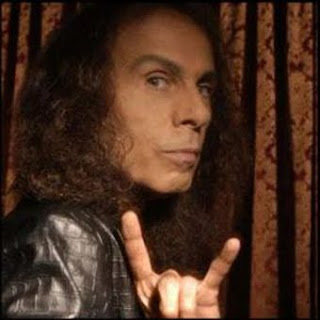
Ronnie James Dio (1942-2010)


As a kid growing up in the grunge era, I had always assumed Ronnie James Dio was a bit of a joke. My only memories of him as a kid were from music videos where he pranced around on rooftops and sang about rainbows and holy divers while wielding swords and shields. For a long time, I could not get past the silly image of this 5’4” (and I’m being generous) man with a receding hairline and crooked teeth, as he sang about “circles and rings” and “dragons and kings.”

When I turned 18, however, that all changed, when I bought Black Sabbath’s Heaven and Hell on a whim one day. Some of the song titles turned me off initially – “Neon Knights,” “Lady Evil,” “Wishing Well,” – but, I figured, it’s Sabbath, it can’t be that bad. I had been a huge Ozzy-era Sabbath fan, with the exception of Never Say Die!, their last release with Osbourne fronting the band. Tony Iommi had long been one of my guitar idols, and I’d read how Dio really gave new life to the band and resurrected their career in the 1980s, but I was still reluctant. I’m glad I put my fears aside, as Heaven and Hell pretty much blew me away from the start. “Neon Knights,” as silly as the lyrics may have been on the page, sounded completely genuine and honest coming from the convincing, powerful pipes of Ronnie James Dio. Damn, I thought, I was wrong about him all along.

I had the pleasure of seeing Dio (the band) open for Iron Maiden in the summer of 2003. I had avoided most of Dio’s (the band, again) recorded output due to those cheesy music videos I referenced before, but seeing the band live really made them connect with me a lot more. Hearing the classics like “Holy Diver” and “Stand Up and Shout” in person made them seem a lot less cheesy, and a lot more ass-kicking. When the band busted into “Heaven and Hell” and Rainbow’s “Stargazer” (another classic from Dio’s pre-Sabbath supergroup, also featuring Richie Blackmore of Deep Purple fame), I was simply blown away.

For whatever reason, I listened to Heaven and Hell a lot in the summer and fall of 2002, and many times in the years that followed, yet I didn’t pick up it’s follow-up, Mob Rules, until about 2006. Maybe I held Heaven and Hell in such high regard that I didn’t want to be disappointed with what came after it. Either way, I regretted doing so, as Mob Rules is a classic follow-up, still very worthy of the Black Sabbath name. Around the time I got that album, rumors of the Heaven and Hell line-up of Sabbath reuniting for a tour began to surface. It ended up being the Mob Rules line-up, but a part of me realized I had to see them at some point. Luckily, that wish came true in the summer of 2008 when I saw the band co-headline at the Mohegan Sun arena with Judas Priest.

Dio was 65 at the time of this show, but you would not be able to tell judging by his energy and the power and intonation of his voice. Hearing the classic Sabbath mark II tracks in person with the guys who recorded them originally was just awesome. It also seemed that the public perception of Dio changed around this time, as he was no longer a cheesy laughingstock of metal, but a stalwart, pioneer and visionary of the genre. It seemed like the reunion with Sabbath, then re-named Heaven & Hell, really legitimized Dio for a lot of the mainstream rock and roll and metal press. The band capitalized on such good fortune and recorded a brand new album in 2009, The Devil You Know, which was met with great critical and fan reaction. The band was supposed to tour this summer, despite Dio announcing that he’d be undergoing medical treatments throughout the year. Unfortunately, that tour was cancelled just weeks ago.

I’m not going to deny that a large portion of Dio’s lyrical output is fantastical garbage, but that’s not the issue here. The issue is that one of metal’s most influential voices and pioneers has sadly passed away, after battling stomach cancer, at the age of 67. Every reaction I’ve read to the news has said what a humble, kind, funny and genuine spirit Dio was, which makes it all the more of a shame. I wish I could have gotten to see Heaven & Hell perform live one more time, as they really put on one of the greatest shows I’ve ever seen. R.I.P. Dio.

Matt Steele

Monday, May 17, 2010

The Random Ten #17


John #1) Masta Ace – “Last Rights” – Disposable Arts (2001)

“Last Rights” is the penultimate track from Masta Ace’s absolutely magnificent Disposable Arts album. This song is really a skit, serving to wrap up the story of the album (Ace leaves the tough streets behind and goes to rap college, or something). Nothing happens in this “song”, but everything that precedes it is terrific. Masta Ace is unlike most rappers I’ve heard. He still boasts and brags, but he’s coming from a place of bitterness and anger because he’s not famous or rich but considers himself much better than his contemporaries. He may have a point. There’s angst in his songs, towards the record industry, other rappers, and himself. It’s a fascinating and sometimes transcendent listen, and a much different take on the “look how much money I have” style of hip-hop.

Matt #1) Metallica - "The Call Of Ktulu" - Live: Cleveland, OH, 12/18/83 (not an official release; the song originally appeared on Ride The Lightning [1984])

This is one of the earliest live performances of this classic Metallica instrumental, although I find it weird that they played it live at all. An 8-minute instrumental of epic proportions, this didn't exactly fit in with the Kill 'Em All tunes the band was playing at the time. Regardless, this was an early sign that Metallica were not ever going to try to live up to expectations, and they would continue to progress and do whatever the fuck they wanted, when they wanted. Cliff Burton's bass acrobatics are more prominent in the mix on this bootleg than on Ride the Lightning, so it's great to hear the late bass legend tear it up on this one.

John #2) Ryan Adams & The Cardinals – “Games” – Jacksonville City Nights (2005)

Jacksonville City Nights represents one of my favorite album titles, if that counts for anything. “Games” is a standard light and airy Adams tune. It’s compact and brief, with a memorable harmonious chorus and some nice slide guitar work throughout. It’s a nice song, but it’s not long enough to develop into much.

Matt #2) Bruce Dickinson - "I Will Not Accept the Truth" - Skunkworks (1996)

An underrated solo album that's often unfairly labeled as Dickinson's attempt at grunge, Skunkworks really is a fine piece of work. "I Will Not Accept the Truth" is a fine hard rock song, with Dickinson's ear for melody and catchy hooks very apparent throughout. Much different than Iron Maiden, sure, but still a great performance from one of metal and rock's greatest vocalists ever.

John #3) Drive-By Truckers – “Moved” – Southern Rock Opera (2001)

“Moved” is culled from DBT’s two-disc concept album, Southern Rock Opera, about a Lynyrd Skynyrd-type rock band and their formation, trials, tribulations, and disintegration. Southern Rock Opera is much more ambitious and sprawling than it might initially let on, and its completion and subsequent success helped to put the band on the map. “Moved” features sparse instrumentation, with rough and tinny vocal accompaniment. “Moved” is truthfully not one of the band’s finest moments, but it’s meant more to move along the story of the album than to rock out. It’s just kind of a grungy country song.

Matt #3) Probot - "Dictatosaurs" - Probot (2004)

Probot was Dave Grohl's metal side project that featured vocalists from King Diamond to Cronos (Venom) to Lemmy, to even Jack Black on a secret track. "Dictatosaurus" features Snake, of Voivod fame, and not surprisingly, it sounds a little like Voivod. I was a huge fan of the Probot project when it was first released, as it contained Max Cavalera's best song since his appearance on Deftones' "Headup," "Red War," and also featured some great riffs and songs throughout. "Dictatosaurus" is a good tune if you're a fan of Snake's unique vocals, which I am.

John #4) The Flaming Lips – “She Don’t Use Jelly” – Transmissions From The Satellite Heart (1993)

Though the Flaming Lips had already been around for about ten years releasing a multitude of albums prior to this, “She Don’t Use Jelly” was their first pseudo-hit and the first true nationwide exposure for the band. According to the Flaming Lips documentary Fearless Freaks, without “She Don’t Use Jelly” the band either would have been dropped by Warner Bros. or would not have been given the artistic freedom to blossom on their subsequent releases.

The song is also fucking awesome. The lyrics are simple, but fun and charmingly bizarre; weird but inviting. A raucous guitar part enters with the chorus and really makes it difficult not to like the song. “She Don’t Use Jelly” is a staple of lo-fi indie/garage rock, and a song worthy of notice.

Matt #4) Brutal Truth - "Everflow" - Kill Trend Suicide (1996)

I'm normally not a huge grindcore fan, as most songs sound the same and are just blasting away for 30 seconds before the next track, but Brutal Truth are pioneers that know how to write an actual song, even if it's only 45-seconds long. "Everflow" is a punishing track that gets right to the point and leaves you feeling beaten and abused, like most good grindcore should.

John #5) The Black Crowes – “Oh Josephine” – Warpaint (2008)

This is timely! The band recently announced that they’re breaking up yet again at the conclusion of this calendar year. They had broken up once before, in 2002, and returned a few years later with this album.

I have traditionally been a huge Black Crowes fan, but Warpaint struck me as banal Americana/country from a band that was rusty and relying on their old bag of tricks to get by. I haven’t listened to the record since, but “Oh Josephine” is not a bad song. Banal Americana/country can still sound pretty, but this isn’t particularly memorable or exciting, and probably doesn’t need to be 6 ½ minutes. There’s no urgency, and the indelible Black Crowes stamp is not here. It’s a song I’ve heard a thousand times, often done better. A really nice cascading ending helps things, but it’s a bit of “too little, too late”.

Matt #5) The Rolling Stones - "Miss You" - Forty Licks (2002; song originally released on Some Girls [1978])

The "woo-hoo-hoo-ooh-hoo-hoo" vocal hook of this song will now be in my head all day. Thanks a lot, Mick. One of the Stones' most instantly-recognizable tracks, this is one of their bluesier, soulful numbers, that is catchy as hell. Great song from a legendary band.

John #6) R.E.M. – “Wendell Gee” – Fables Of The Reconstruction (1985)

Early R.E.M. is often either frantic or sonically strange and powerful, which is why “Wendell Gee” was quite startling to me. It’s a straightforward slow-paced tune with banjo accompaniment, and the type of song that’s perfectly suited to gazing out of a train window (which is what I’m doing as I write this). Perhaps that low-key contemplativeness is appropriate for the album with lead single “Driver 8”, about a tireless, lonesome engineer. This is a really nice song.

Matt #6) Ryan Adams & The Cardinals - "A Kiss Before I Go" - Live: Boston, MA 9/7/08 (not an official release; the song originally appeared on Jacksonville City Nights [2005])

Sound quality isn't top-notch on the bootleg I have from this show, but this is a great song, nonetheless. Firmly located on the country side of the country/rock spectrum that Adams so frequently resides in, "A Kiss..." combines two of his favorite lyrical topics -- lost love, and alcohol. A catchy tune and a great performance from a show I attended a couple years back.

John #7) Neil Young – “Bite The Bullet” – American Stars ‘N Bars (1977)

“Bite The Bullet” is a criminally underrated track from Young’s American Stars ‘N Bars album. It features tremendous guitar work and structure, strongly foreshadowing Young’s grungier tendencies over the last twenty or so years. It doesn’t deviate from the mean too much; there’s no fifteen minute feedback section here like there are on so many of Young’s 1990s albums. “Bite the Bullet” is just a seldom heard, kick-ass rock song.

Matt #7) Rage Against The Machine - "Testify" - The Battle Of Los Angeles (1999)

The opening track from Rage Against the Machine's last original studio album, "Testify" was also a rock radio staple of the early 2000s. A great opener for the album, as it just builds up on Tom Morello's muted picking while the drums and bass increase in volume, the main riff and chorus are undoubtedly catch and heavy, something that all of the best RATM songs are.

John #8) Ben Folds – “Zak And Sara” – Ben Folds Live (2002; the song was originally released on Rockin’ The Suburbs [2001])

I cannot seem to stop writing about this guy. Anyway, this is a live performance of a song that had initially appeared on his solo breakout album, Rockin’ The Suburbs. The crowd is amped up for this and sings along with it, which sounds great. On the original, “Zak And Sara” features full instrumentation, and the song works much better there than here, where Folds is alone with a piano. Certain pieces scream for a snare hit or bass fill, and though this is a faithful and strong rendition, I’d recommend tracking down the studio version.

Matt #8) In Flames - "Murders in the Rue Morgue" - Subterranean (1994)

A bonus track from the re-issue of In Flames' Subterranean EP, this Iron Maiden cover sounds great, musically, but Mikael Stanne's vocals don't do the original justice. Still, an energetic cover from a band that would not have existed were it not for Iron Maiden, so it's nice to hear them pay respect where it's due. If you're a fan of Iron Maiden but not too big into death vocals, this cover might not do the trick for you, but if you want something on the heavier side, this is a good cover.

John #9) Tom Petty & The Heartbreakers – “Here Comes My Girl” – Greatest Hits (1993; song was originally released on Damn The Torpedoes [1979])

Ever since a friend of mine referred to Tom Petty as “darts music” (aka you should only listen to him when drinking and playing darts), I have a hard time taking the man seriously. His Greatest Hits album is fun (it’s probably the quintessential greatest hits album from any artist ever), and I love his Wildflowers record, but there is something about him that, while not quite cheesy, is very simplistic. In ways, he strikes me as a much better Stone Temple Pilots, another singles machine whose entire body of work can largely be summed up by a greatest hits album with no need for further exploration (again, save for Wildflowers).

“Here Comes My Girl” is a nice song, just like everything else on his Greatest Hits compilation. I’m all ears for an older album from Petty I really need to listen to, so please share, but for now I’ll have to stick with this compilation whenever I feel the need to listen to some Petty, or play darts.

Matt #9) Dave Matthews Band - "Fool To Think" - Everyday (2001)

This album got shit on by hardcore DMB fans upon its release. Personally, I like a lot of tracks from this album, as they're short, to-the-point, and pretty catchy overall. Unfortunately, I'm not a big fan of "Fool to Think." It's not awful, it's just not that catchy, and the timing of the riff and beat just seems a little off, but not in a good way. I had to skip ahead to the next track, I'll be honest.

John #10) Sufjan Stevens – “Come On! Feel The Illinoise!” – Illinois (2005)

I’d describe much of what Sufjan Stevens does as a sonic collage, one I truly like and appreciate. He just sounds so different, and yet so inviting. That’s a winning combination.

We have that here with “Come On! Feel The Illinoise!” Horns, backing vocals that play off each other, and Stevens with his strange song structure and strange timing. Often times bands or artists strive to be different and end up creating something off-putting or unlistenable. Stevens has largely avoided that pitfall, and in the process has created some strong, memorable music. Kudos to him.

Matt #10) Anthrax - "Time" - Persistence Of Time (1990)

...and I'm glad I skipped to the next track, because this is one of my favorite Anthrax songs. The opening track from 1990's Persistence of Time, "Time" is an epic, mid-paced thrash song that builds and builds one great riff after another. Even the usually-effeminate Joey Belladonna sounds monstrous on this one, and the lyrics are pretty great. Dan Spitz's solos could be very hit-or-miss at times, but he nails the one on this track. Great song from Anthrax's last album with Belladonna (well, until he rejoined the band AGAIN just a week or so ago, and is apparently recording an album with them now. Color me indifferent.)

Matt Steele/John Lacey